Tuesday May 1, 2012
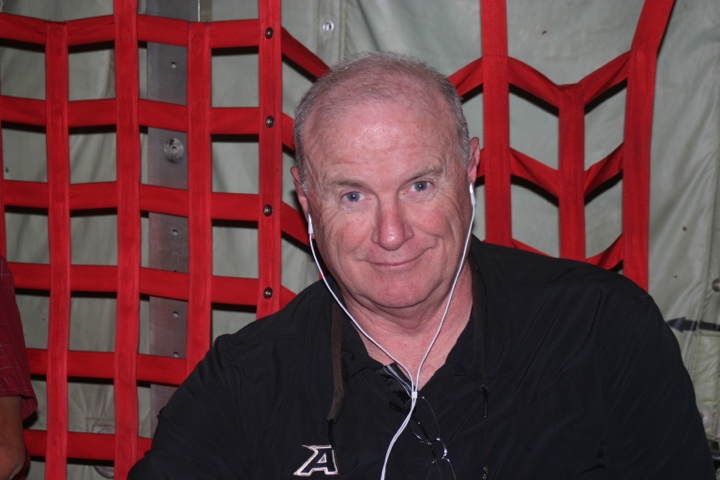
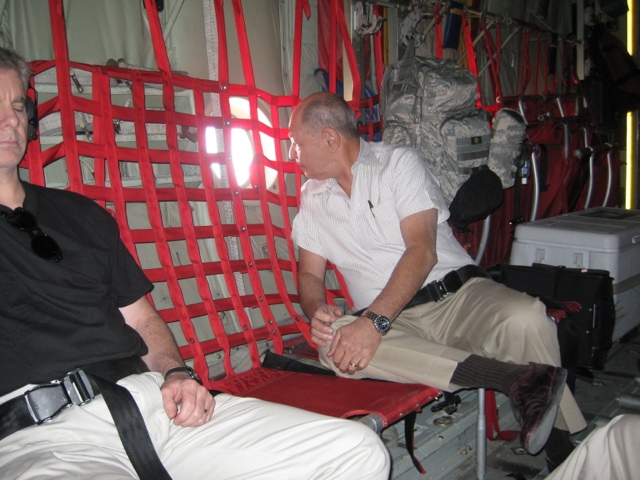
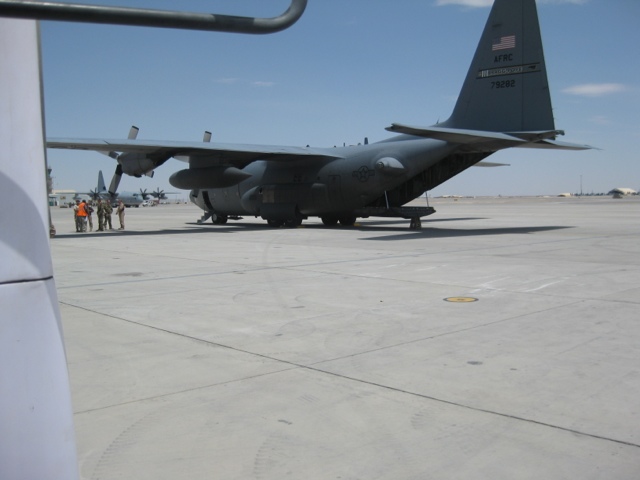
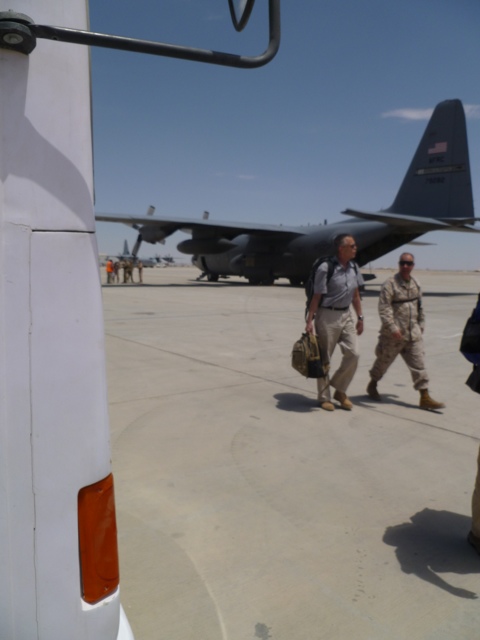
After an 0430 “show time” at the APOD (air point of departure – the military side of the Kuwait City airport) and five hours on a C-130, we arrive at the sprawling Camp Bastion / Camp Leatherneck complex in southern Afghanistan. Camp Bastion is the principal base of the British forces in this area and the location of the main airfield. Camp Leatherneck abuts Bastion and is the headquarters of Task Force Leatherneck, the main component of which is 1 MEF – the First Marine Expeditionary Force or “Eye MEF” – a 2-star command headed by a United States Marine Major General, MG Gurganus. About 15,0000 US Marines are on Leatherneck, most a part of the huge logistical tail it takes to support the “trigger pullers” in the outlying outposts. There are also quite a number of civilian contractors and a smattering of coalition forces from such nations as Jordan, Georgia, Norway (I think) and, of course, the United Kingdom. The Task Force Leatherneck Deputy Commander is a British Army Brigadier. I think, all-in-all, there are around 20,000 personnel on Bastion/Leatherneck. The base is located to the north and west of Lashkar Gah, the capital city of Helmand Province.
Leatherneck, though a forward deployed headquarters, is very much a garrison environment. The people here primarily do office administrative work, maintain reasonably regular office hours, although they work very long hours and have no days off, and there are rules, regulations, policies, procedures, rules, paperwork, regulations, rules and a few more procedures to deal with. It’s ambiance is military chic – very utilitarian, no frills attached.
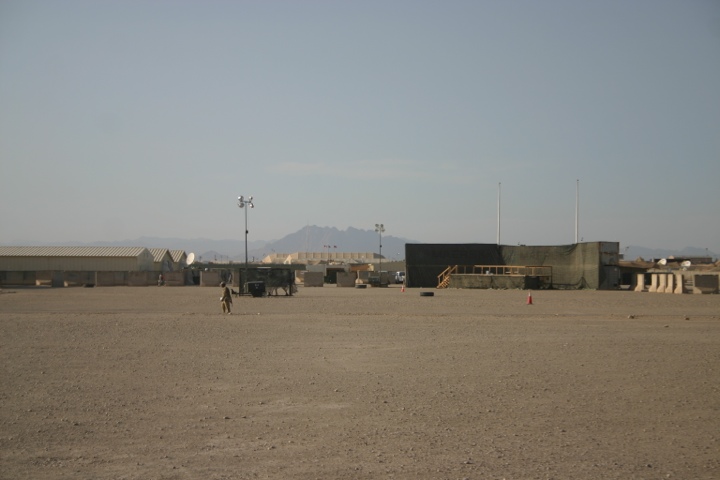
The landscape on Leatherneck is table-top flat and there is nothing – repeat, nothing – green in sight. Every surface is either paved or covered with coarse gravel. The “crunch crunch crunch” sound of boots on rocks is omnipresent. The climate is arid and the high temperatures this time of year can be in the mid 90’s. Overnight lows in the middle 60s.
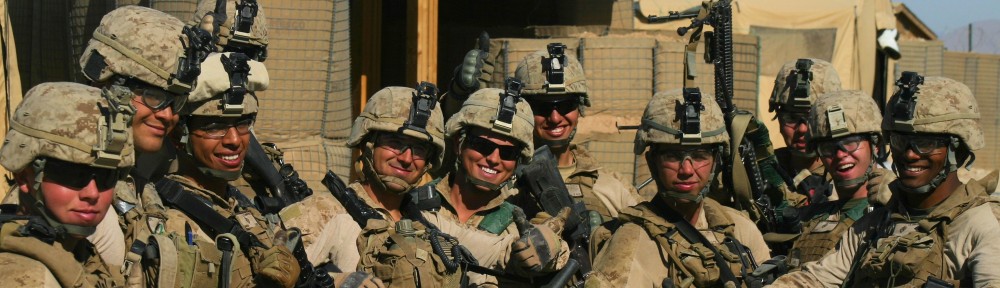
Upon our arrival, we are greeted by Major Stockwell, USMC, a Marine Corps Lieutenant, several senior NCOs, along with a couple of corporals and lance corporals who will form our official escort and security detail during the course of our stay in the war zone. Most of them, if not all of them, come from the logistics section of the staff and, more particularly, the food service organization. They are cooks and managers / overseers of contract personnel who prepare the food in the many dining facilities (DFACs or “dee faks”) that dot the base. So, our safety and security in the field is, appropriately, being ensured by cooks! Nevertheless, these are United States Marines and every Marine is first a rifleman.
We receive a welcoming in-brief from the team that will support us, including a short talk by a Colonel Fitzgerald, the Chief of Staff to the Commanding General, an even shorter “Semper Fi!!” motivational welcome from the Sergeant Major and a detailed review of our mission plan from Gunnery Sergeant Anderson. We also meet Master Sergeant Holloway who, along with a second Master Sergeant, a female Californian named Wheeler, will have charge of each of the two teams we will send into the field tomorrow.
It seems that the main focus of the headquarters staff is the management of the Obama Administration’s mandated force reductions in this region. All Marines will be out of Afghanistan by the end of October and primary responsibility for the security of Helmand will assumed by the Afghan National Army (ANA), the Afghan National Police (ANP) and lower level provincial and local security forces. Our briefers make it clear that this is, and I quote: “a numbers-based draw down and not a conditions based draw down.” In other words, the real policy objective is to reduce our numbers by a date certain, without regard to the military conditions on the ground. They do report, however, growing confidence in the ability of the ANA and the ANP to step up to their roles. There is considerably less confidence in the regional and local security forces.
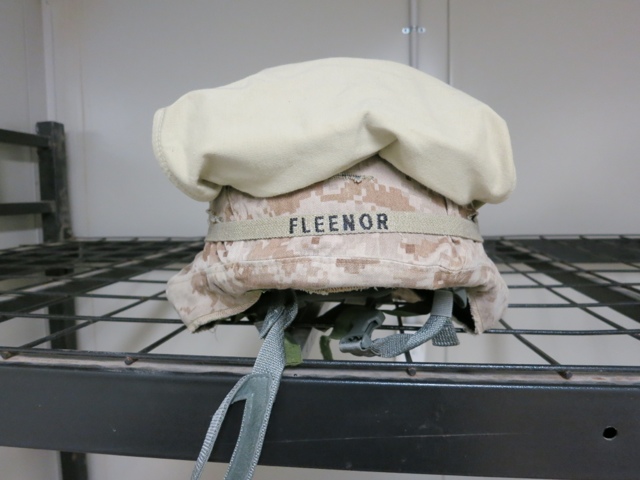
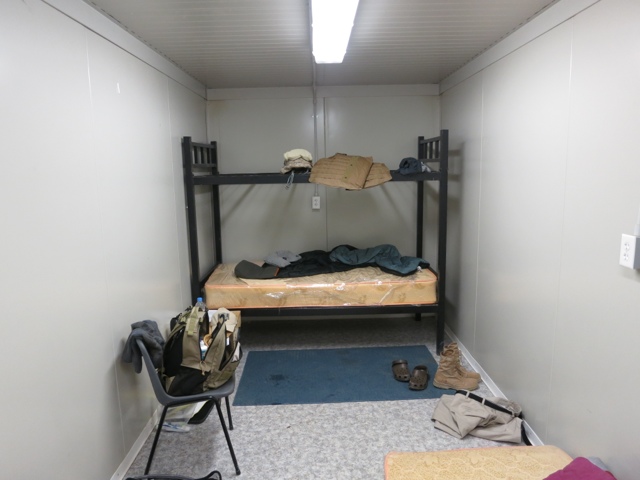
After the in-brief, it is off to billeting to secure our quarters and draw our PPE – “personal protective equipment” consisting of a kevlar helmet and individual body armor with protective front and back ceramic plates – that we will be required to wear when moving from location to location in the field. Our quarters consist of the ubiquitous metal containers used for multiple purposes over here. On our mission to Djibouti, these were known as “clues” – CLU or Containerized Living Units. In Baghdad and Mosul, Iraq, they were known as “chews” – CHU for Containerized Housing Units. Here, they are just “cans” – CAN for can. Completely functional, air conditioned, and just a brief stroll to the latrines and showers, which are themselves metal containers modified for those respective purposes.
Sometime along the way, Harvey informs me that I will serve as his “Deputy” on cooking Team 1 (I think that amounts to a promotion from private all they way up to private) and he, Tony Booth, and Tony’s “Deputy,” Terry Castle, trudge over to headquarters to do final planning for the next three days. I take copious notes. They will be neither considered nor consulted again.
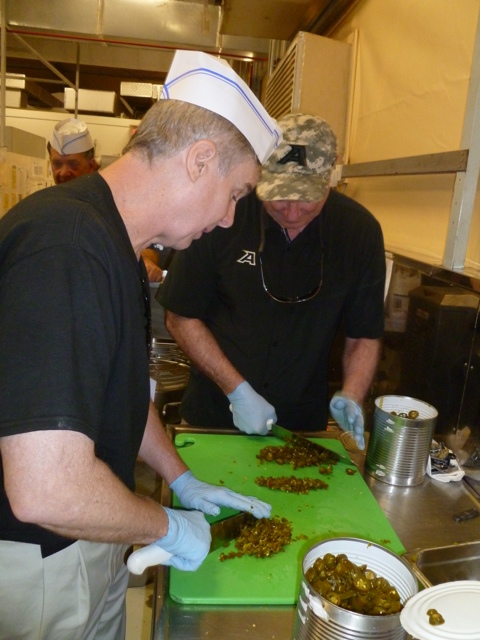
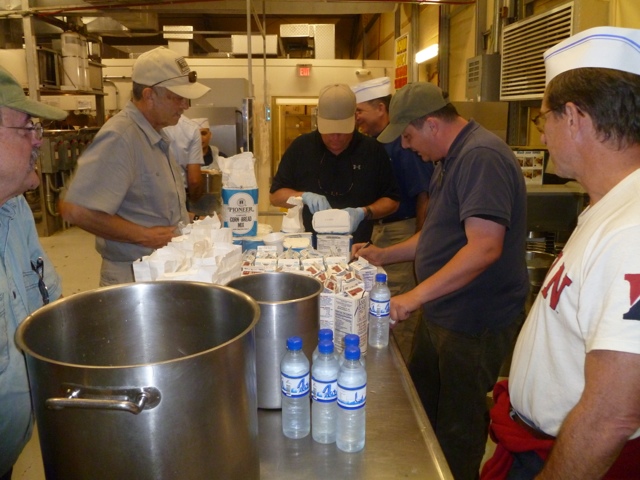
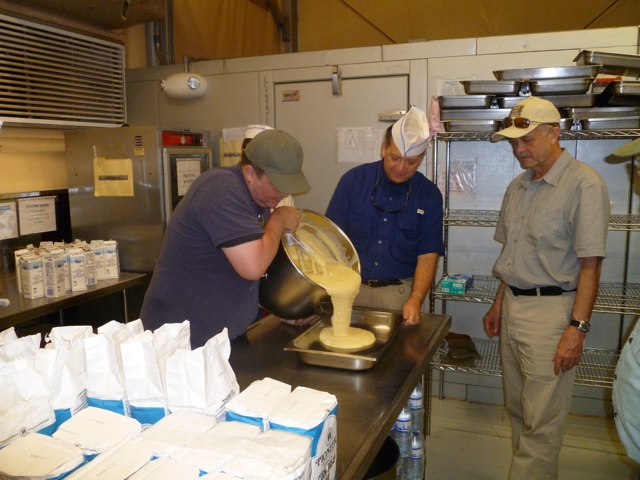
The team shared dinner with our escort party in the DFAC and we then invade and hold a portion of the commercial-grade kitchen to begin our preparation for the fieldwork that starts in the morning. I am placed “in charge” of cornbread preparation. A lofty perch, indeed. We will be serving approximately 2,000 portions of cornbread and we have only one shot at a kitchen. So, we cooked all of the cornbread in advance and placed tray upon tray inside insulated containers for transport to the field. Other members of the team are assigned to review and account for all of the other foodstuffs and to organize them into shipping containers with the appropriate supplies for each of the six COPs – Combat Outposts – we will serve over a three day period.
One of our team, Jules Smith, is a trained chef. I quickly determine that he knows more – way more – about mass production of food than I do. I gladly let him run the cornbread production show. With the help of about 6 other very much “Type A” personalities – many of whom have their own opinions (never mind their complete lack of experience or expertise) on how we should prepare this stuff. After lots, and lots, of trial and error we starting cranking out cornbread in large quantities. The contract kitchen staff – most of whom are Indian, Pakistani, Bahrainian, etc. – get quite a bit of entertainment value out of the Keystone Cops aspect of our cornbread cooking. The contractor supervising them – who was very helpful – said that this is usually a one man job in his kitchen! Well, if one is good, isn’t six that much better? (Hint: “NO”)
I don’t know what time we finished all of the cooking, cutting, packing, checking, cussing, re-checking and re-cussing it took to get ready. But we got ready. We retired to our cans for a short rest with a 0330 wakeup, breakfast at the DFAC at 0415 and a “show time” of 0500 at the airfield for transport to the first day’s cooking sites.