Homeward bound

Saturday May 5 – Sunday May 6, 2012

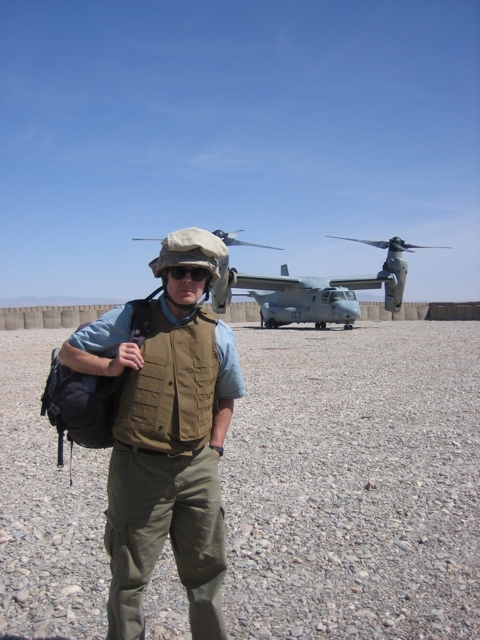
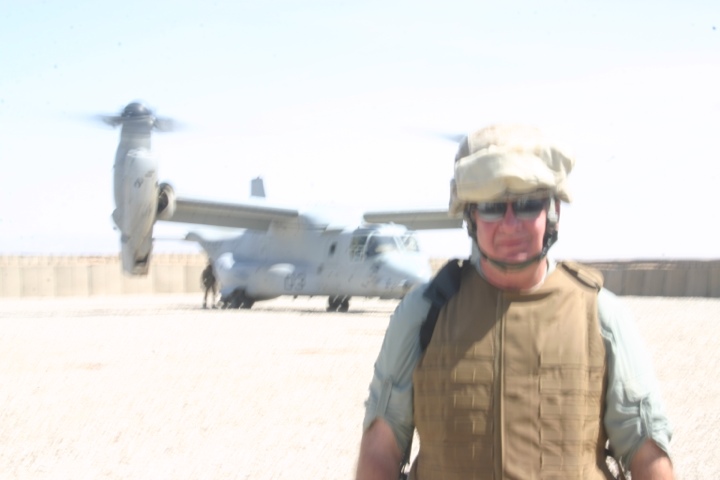
Saturday morning: Wake up, shower, shave, breakfast, pack, link up with Team 2 just back from the field after an extended stay and then off to meet the CG (commanding general). Harvey is itching to get going and has secured space for us on an outbound C-17 transport plane Kuwait.

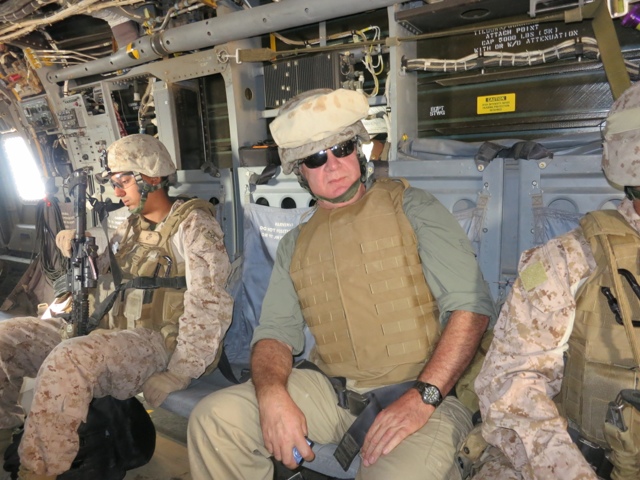
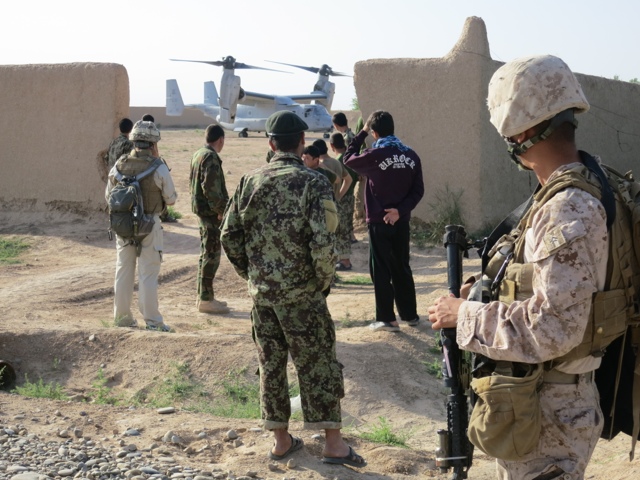
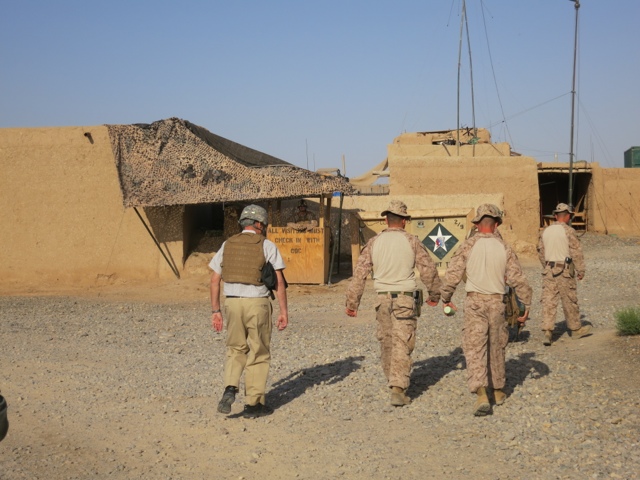
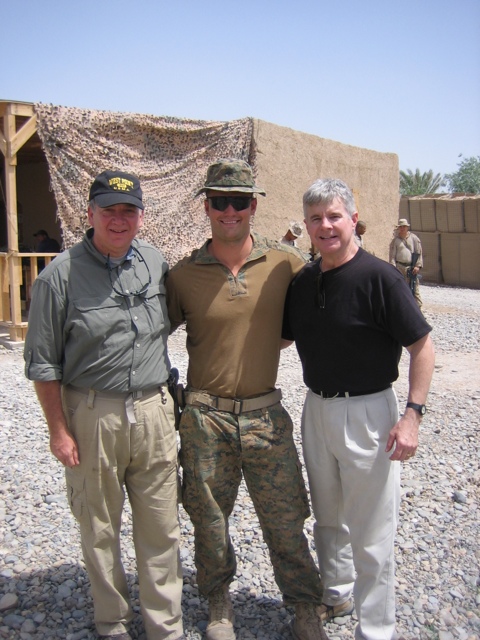
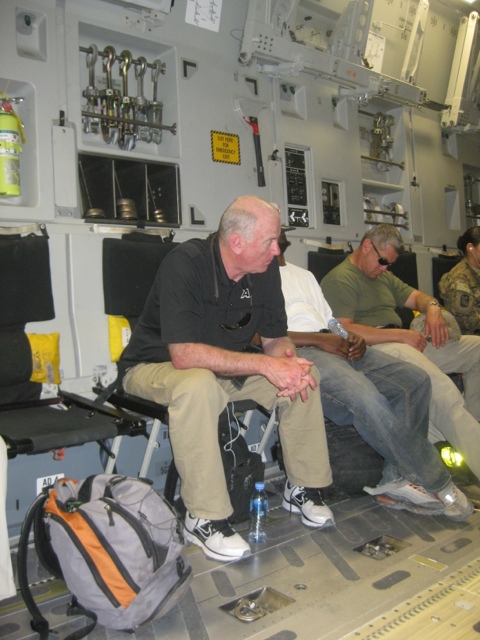
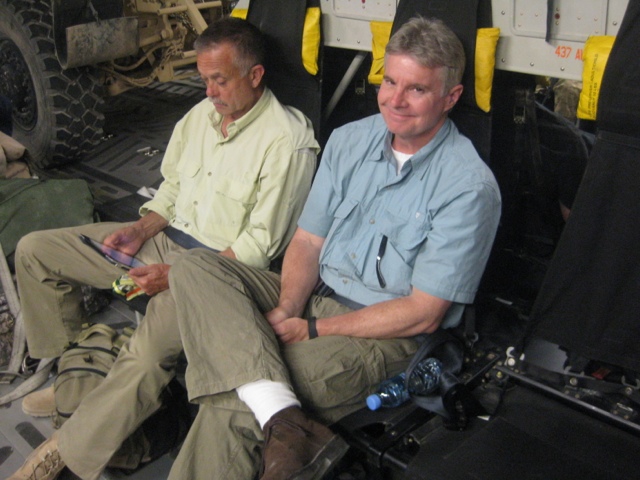
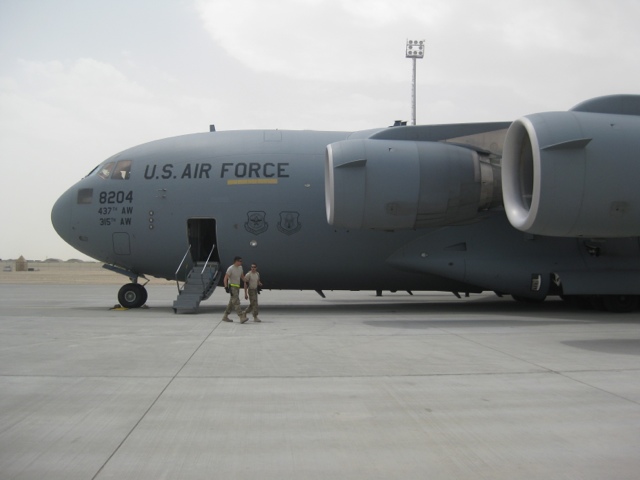
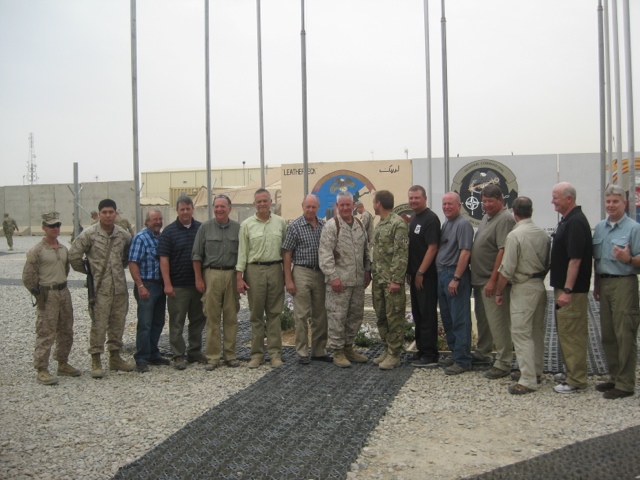
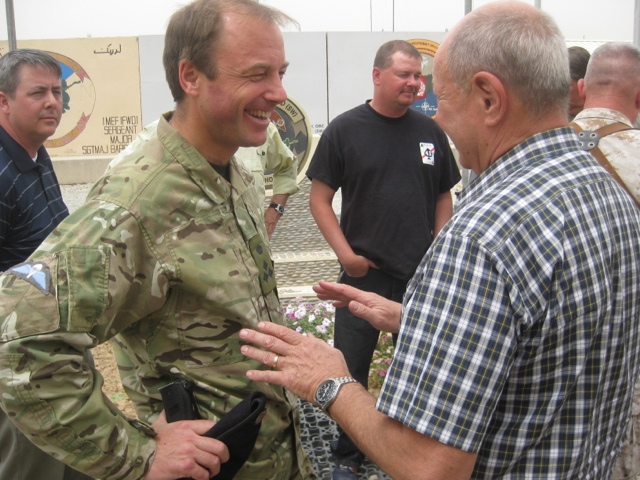
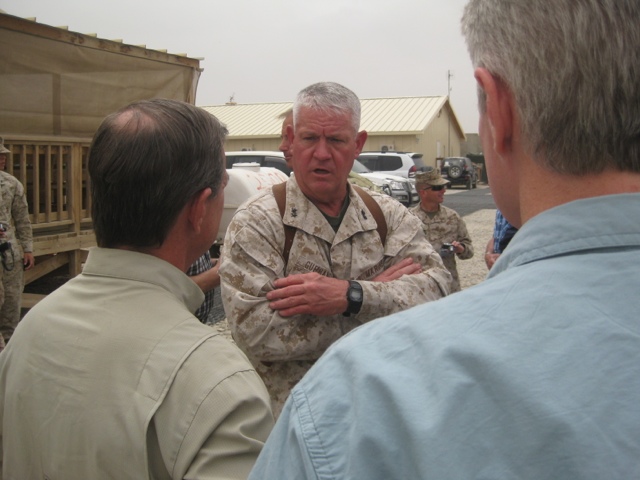
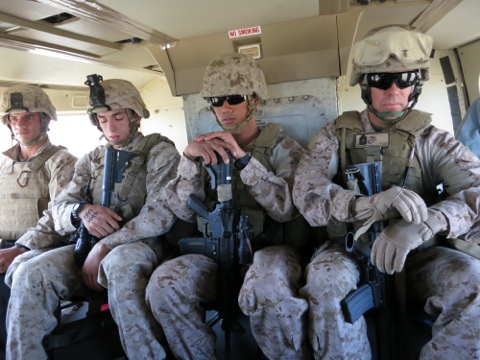
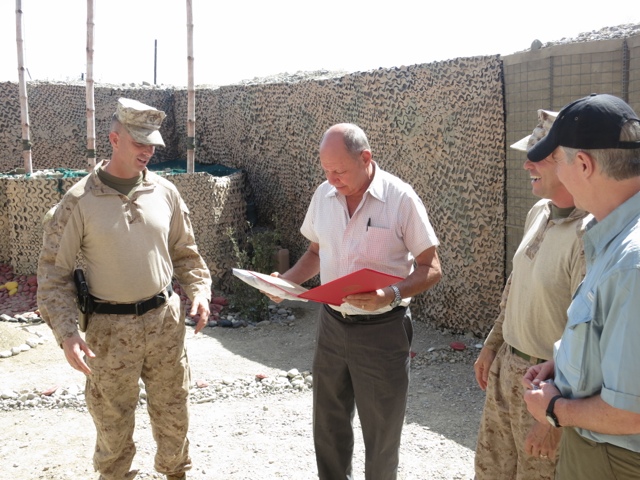
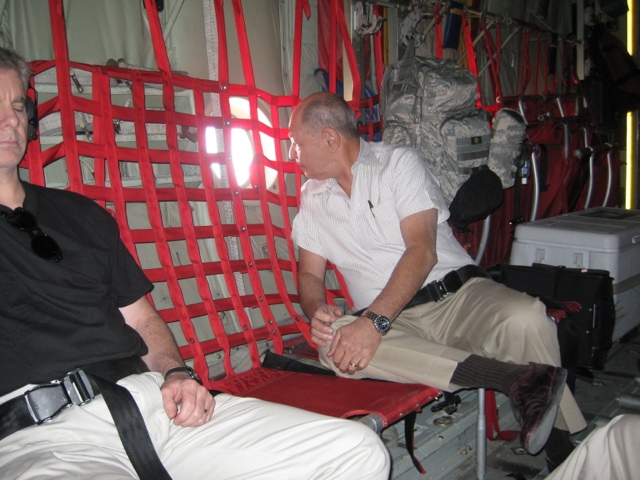
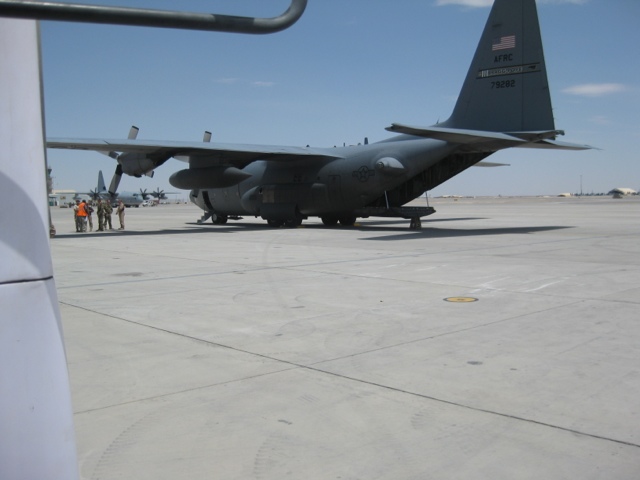
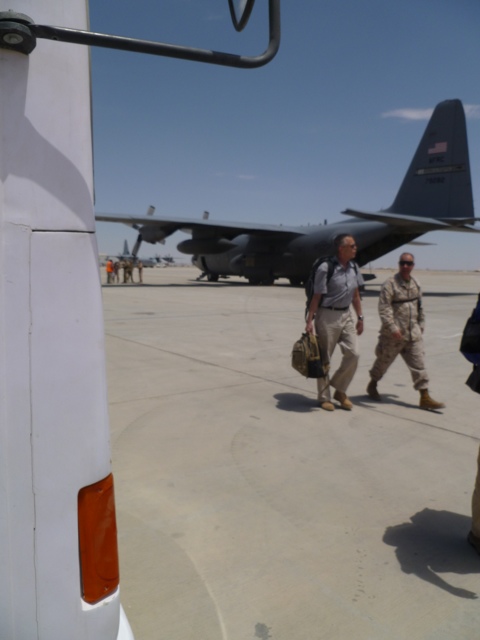
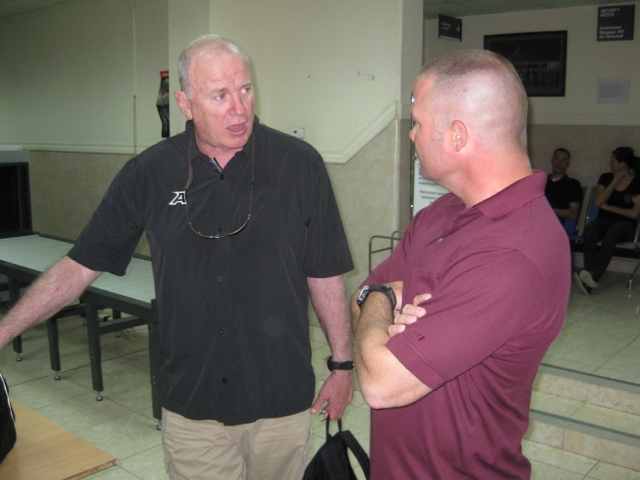
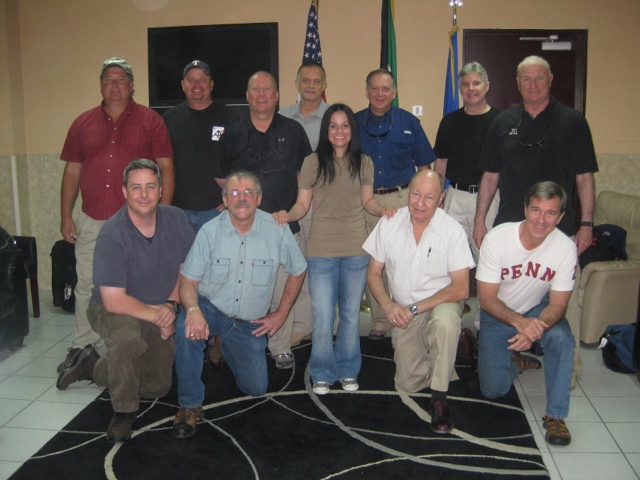
Marine Corps Major General Gurganus, his British Deputy, and a coterie of staff officers meet us at the 1 MEF headquarters. The CG greets us each individually, presents us with his coin, we take a few photos. He then he gets back to running the war and we start the journey home. We did, indeed, make the afternoon plane to Kuwait where, after an easy 3 hour flight, we are met by some of the same Marines who were our driver/escorts during our first passage through there a week previously. The instructions that had received from their higher-ups were simple: take these guys to the civilian airport, drop them off, and get them the hell outta there. And that is precisely what they did. We did – rather, Harvey did – some last minute re-planning of our return flight arrangements, grabbed a hotel room in Kuwait City and went to bed.

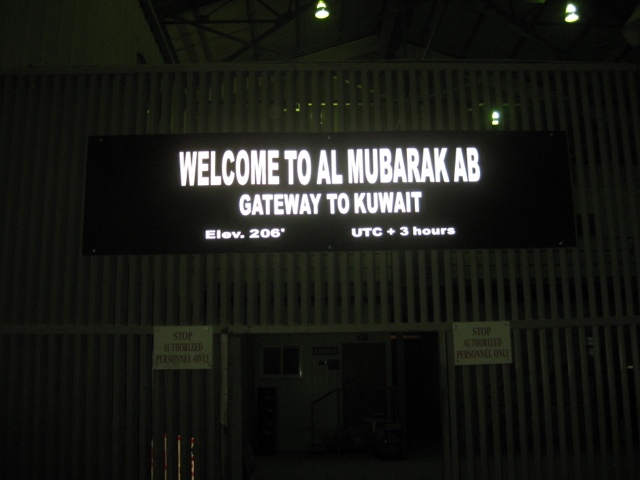
Sunday morning: Back to the Kuwait airport to board a British Airways flight to London and then onward passage to home.

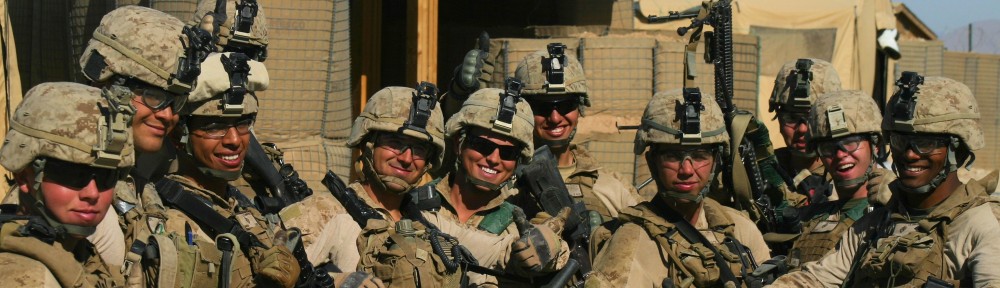
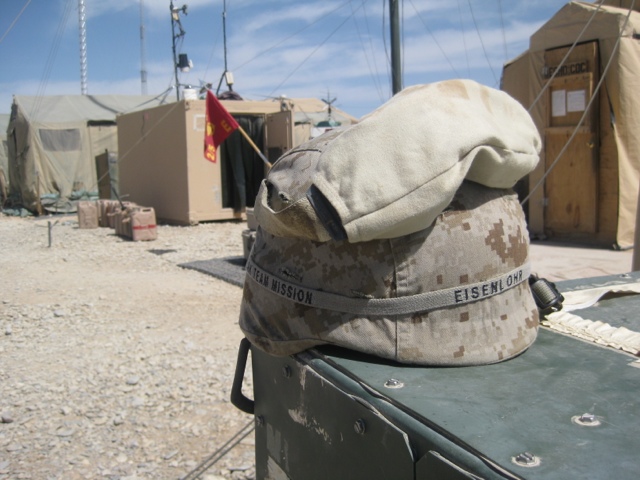
Sunday evening: Home. Glad to be back in Texas and renewed in my respect for our fighting forces and the selfless service they willingly render. They risk all so we don’t have to. Semper Fi, Marines, and thank you for your service and for your hospitality to the members of Steak Team Mission. Godspeed your mission and your safe return home.

20120507-112924.jpg

20120506-173044.jpg

20120506-173032.jpg

20120506-173016.jpg

20120506-172953.jpg

20120506-172938.jpg

20120506-172913.jpg

20120506-172858.jpg

20120506-172826.jpg

20120506-172812.jpg


Shir Ghazay

Thursday May 3 – Friday May 4, 2012

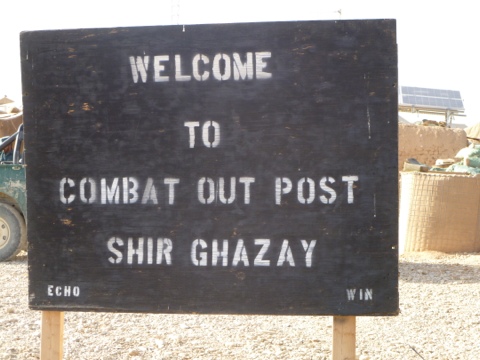
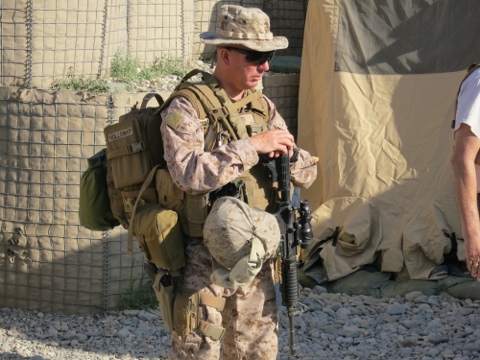
During the late afternoon and evening hours several of us visited the Marines standing post and trying to get a sense of the terrain and our surroundings outside the Hesco enclosure. The Marines tell us that they control everything on our side of a wadi – a dry river bed – about three kilometers to our east. Beyond that wadi the Taliban rule. When patrolling to the east, they say it is common for the enemy to engage them with harassing small arms fire. But, this is always at very long range and their fire discipline is so poor that the chance of getting hit, while real, is slim. When directly engaged by the Marines, the enemy fighters drop their weapons and walk away, knowing that the rules of engagement preclude the Marines from shooting an unarmed person (apparently, however, the ANA are not so constrained, to the Marine’s delight.)

A surveillance system identical to that employed at Coutu is in operation at Shir Ghazay. The civilian contractor operating and maintaining it allowed us to watch him work. Responding to directions relayed by phone from the nearby Combat Operations Center (COC) he can locate and track targets of interest to the commander at a considerable range. We had an opportunity to control the cameras ourselves and see a real time demonstration of the system’s capabilities. While there, I watched them tracking a group of 5 or 6 people on three motorcycles that appeared to be up to no good. I don’t know what they were doing riding around the countryside in the middle of the night, going in and out of various compounds, but it was suspicious enough behavior for the COC to want to monitor it. Earlier, another team member had watched while the contractor surveilled  a man digging a hole along a roadside, apparently – perhaps – to plant a roadside bomb. We do not know the final resolution of either of these observations, but they did give a fascinating glimpse into the tools and technology that is being employed to fight this kind of insurgent war. The contractor told us that he is usually not privy to the decisions that the command team are making with the imagery and data that he delivers to them but, from time to time, he sees a bright flash on his monitor and the threat he is tracking is gone.

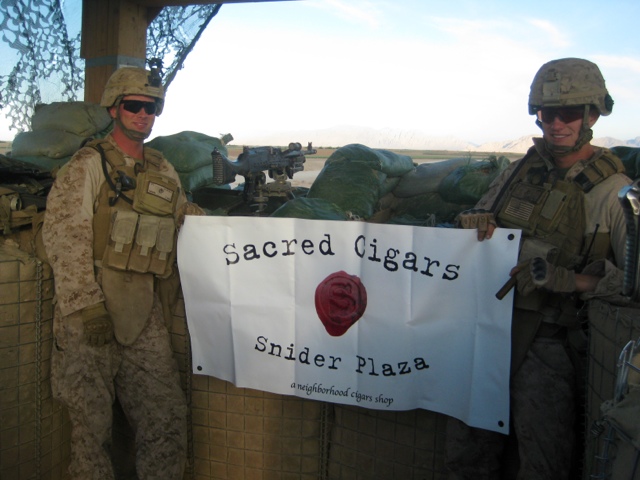
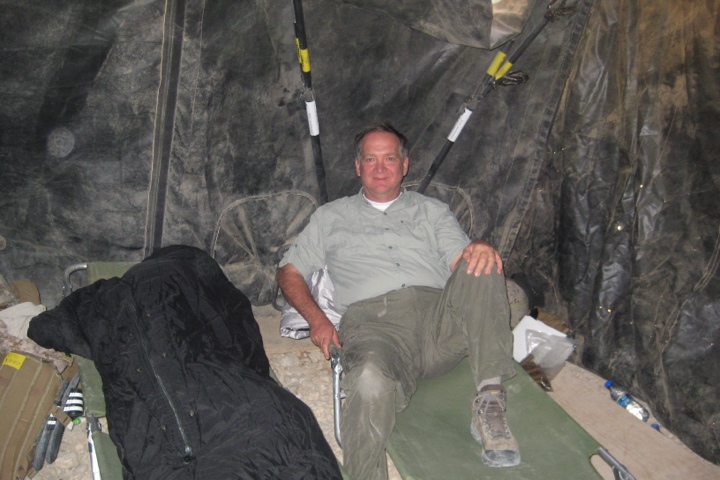
Chad and I make the rounds of the various guard posts, the COC and the tent that serves as a small “internet cafe” for the Marines, dispensing cigars provided by the Sacred Cigar shop in Snider Plaza. These were a big hit and the Marines thanked us profusely. (These guys were unfailingly polite and genuinely appreciative of our presence.) There is a shower tent on the COP, so we are able to rinse off most of the dust before bed.

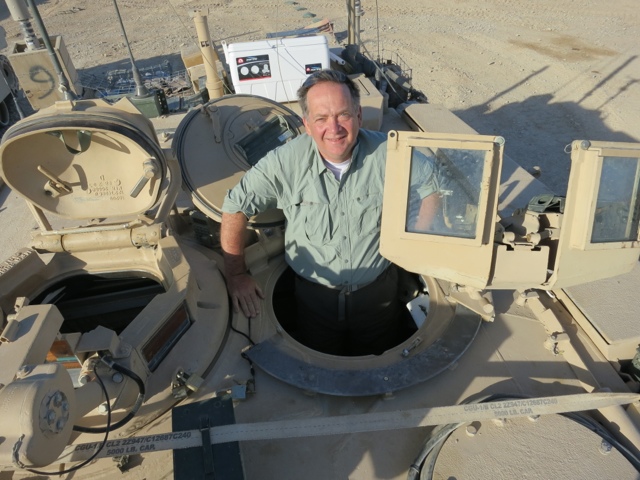
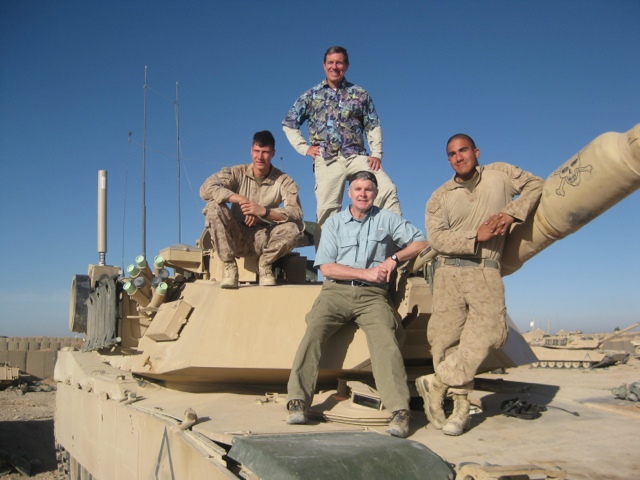
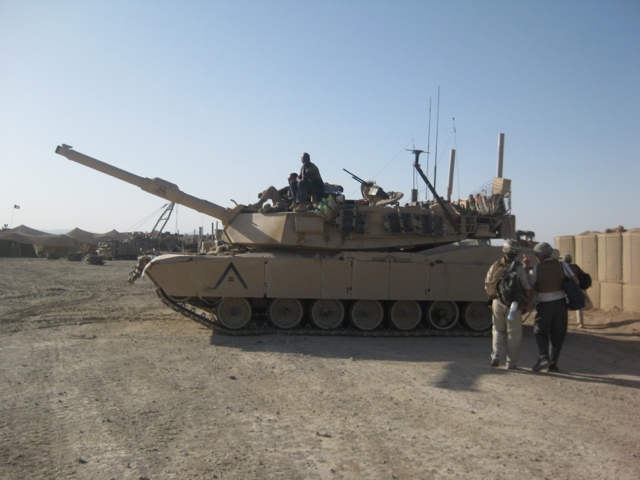
Friday morning we sleep in. Rather than a 0345 wakeup, we are up around 0600. I slept reasonably well, though I did get a little bit chilly overnight. After breakfast of field rations – which consisted of re-hydrated scrambled eggs, corn beef hash and ham (and which I did not eat, settling for coffee and cold cereal) – Wayne and I headed out to visit the Marines on guard duty as well as the Marine tankers on the opposite side of the COP. We spent a good bit of time with a couple of tank crewmen and received a pretty thorough orientation on the M1 Abrams tank. We were able to sit in the commander, loader and gunner positions within the tank and have the various systems employed at each position explained to us. We traversed the turret and I squeezed the main gun trigger, which seemed to make the crewman a little nervous!. (NOTE: Upon hearing this, my Army Armor officer son quizzed me closely about and quickly set me straight. I did not squeeze the trigger. It was the “cadillac” – which transfers control of the main gun between the gunner and commander’s position.)

The tankers are employed primarily in overwatch roles as the Marine infantrymen and/or ANA or ANP conduct patrol operations. This means that they will assume a position where they can observe the ongoing activities of the infantrymen and can provide fire support if needed. The tankers also go out on extended, multi-day missions away from the COP to occupy “blocking positions” along key travel routes and to disrupt enemy movement through the area. These missions can be as long as two or more weeks in duration, while the typical infantry patrol, either day or night, only requires several hours. The tank crewman we spoke with told us that their longest operation was 21 days, during which time they did not leave their tank except to take care of biological needs.

There is also some indirect fire capability on this COP. There is a section of 81mm mortars and I saw one 105mm howitzer. The contractor and a couple of Marines that shared our tent told us of a recent fire mission that was quite impressive and said that they could feel the concussion of the howitzer firing at considerable distance.

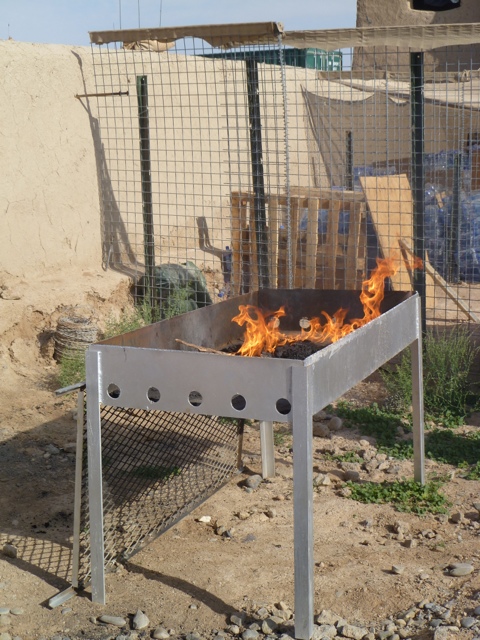
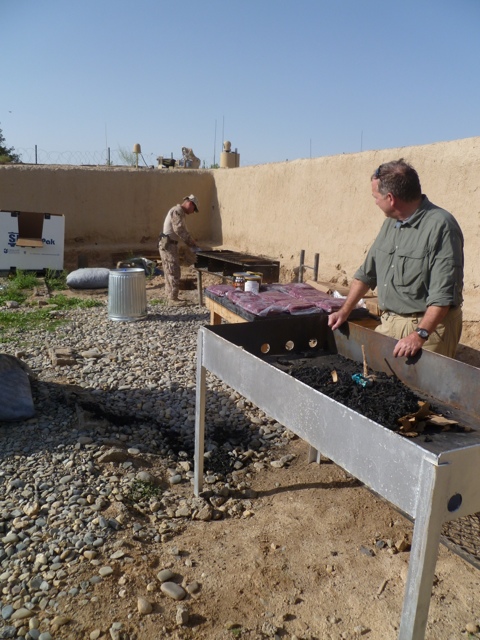
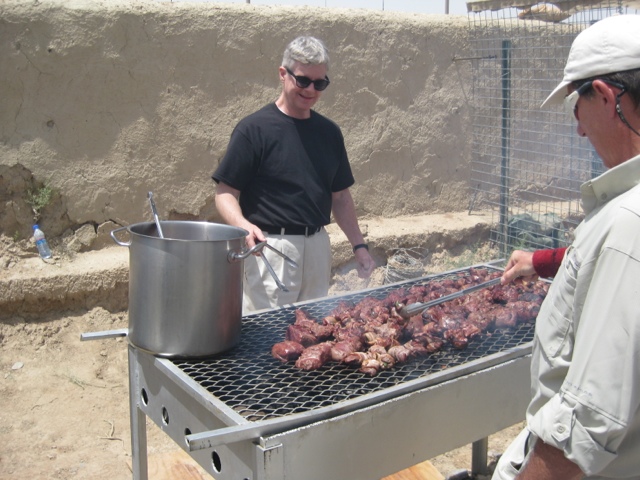
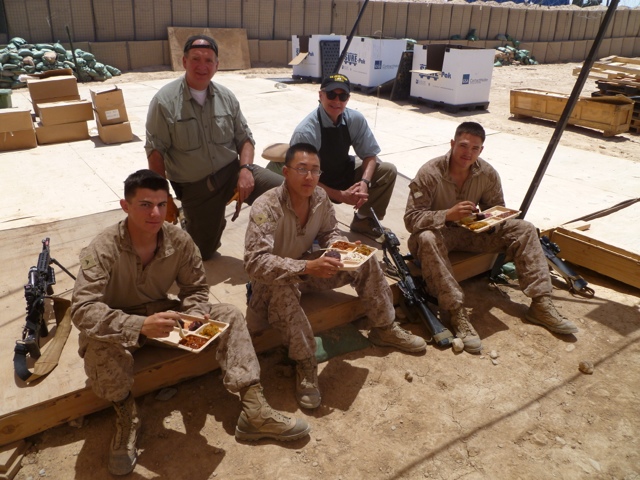
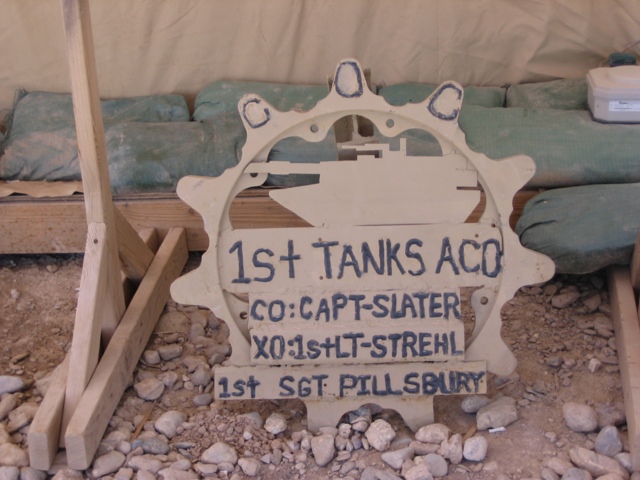
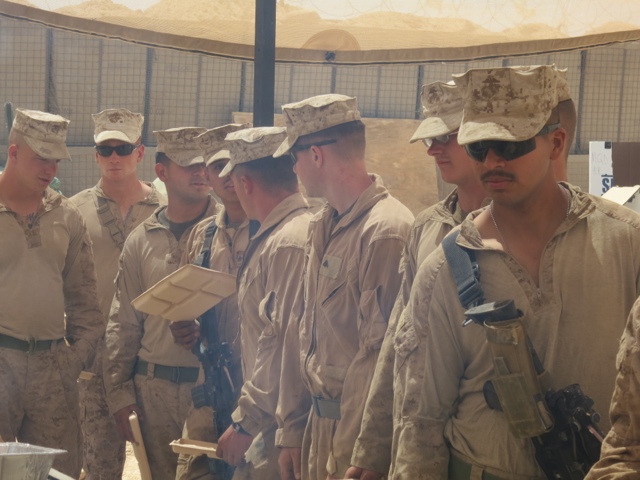
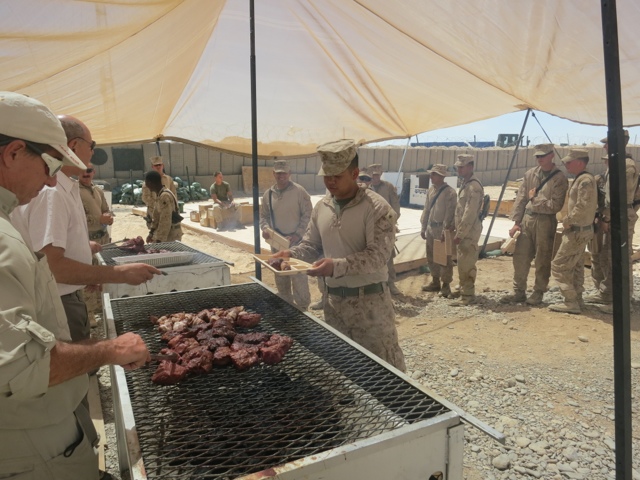
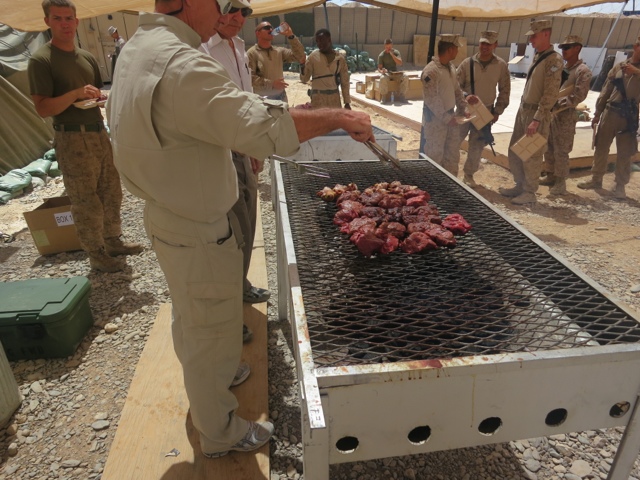
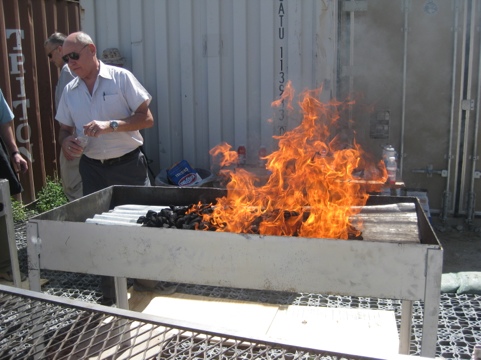
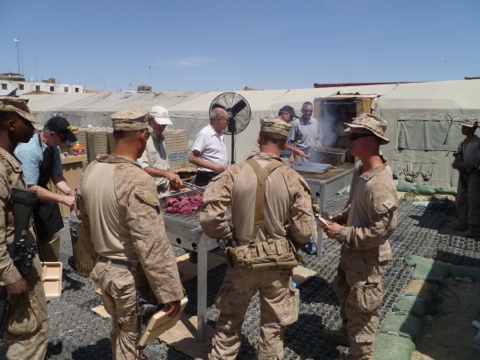
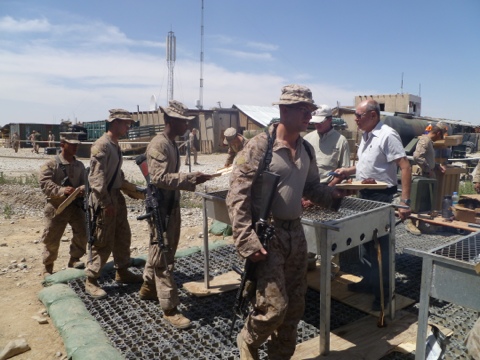
We begin the cooking and serving process around 1030 hours. Harvey, as a former Army tanker himself, had arranged that the Tank Company be the first fed and dispatched me to “tank country” to ensure that they got to the head of the line. I spoke to one of the Platoon Commanders, who knew nothing of our event, and eventually to the Company Commander, Captain Slater. He told me that the First Sergeant of Echo Company (the infantry guys) had countermanded Harvey’s directive and that the priority would go to Marines of the rank of Lance Corporal and PFC first, to be followed by junior non commissioned officers (corporals and sergeants), senior NCOs and then officers last. Well, that was hard to argue with and, to my surprise and delight, Harvey did not make a stink about it. We got the low ranking tankers through the line early and he was happy with that. To his credit, the First Sergeant worked the serving line for the entire 2 hours we cooked and he and the Echo Company Commander were the very last through the line. I very much respect the leadership ethic that says that the commanders do not eat until all of their men are fed.

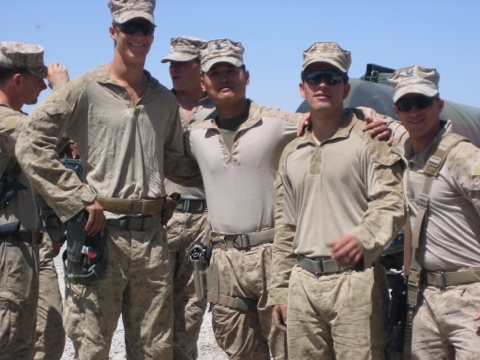
Once again, the Marines could not have been more respectful, polite and appreciative. We were thanked and thanked and thanked, time and again, to the point of embarrassment. Compared to what these guys do every day – and are doing right now, and will continue to do – we did NOTHING. We just flew in, grilled some meat and flew out. It was a privilege and an honor to spend time with them.

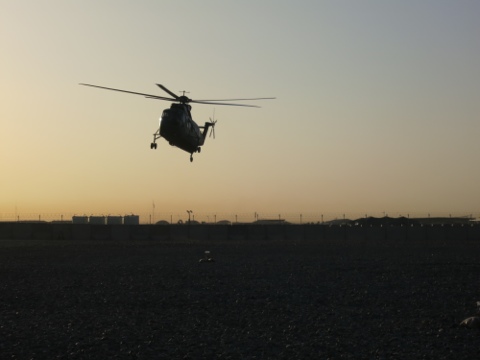
At about 1430 we were picked up by an Osprey and flew back to Leatherneck. We learned that our other team would not be making it back and would spend another night in the field with the Marines. I confess to having a bit of jealousy about that, but I also confess that having a nice hot shower, a mattress to sleep on and a climate controlled can to sleep in was nice.

20120507-112607.jpg

20120506-172504.jpg

20120506-172414.jpg

20120506-172346.jpg

20120506-172337.jpg

20120506-172316.jpg

20120506-172304.jpg

20120506-172244.jpg

20120506-172224.jpg

20120506-172211.jpg

20120506-172040.jpg

20120506-172023.jpg

20120506-172014.jpg

20120506-171957.jpg

20120506-171941.jpg

20120506-171924.jpg

20120506-171905.jpg

20120506-171849.jpg

20120506-171813.jpg

20120506-171800.jpg

20120506-171752.jpg

20120506-171735.jpg

20120506-171723.jpg

20120506-171652.jpg


Musa Qa’la

Thursday May 3, 2012

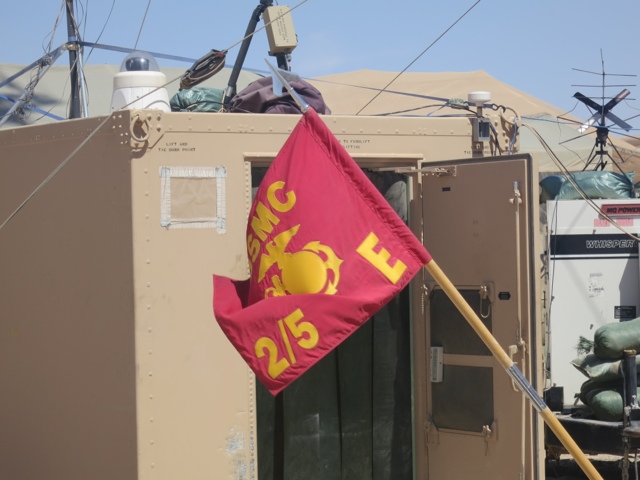
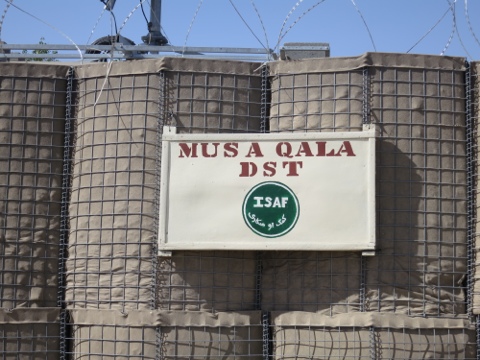
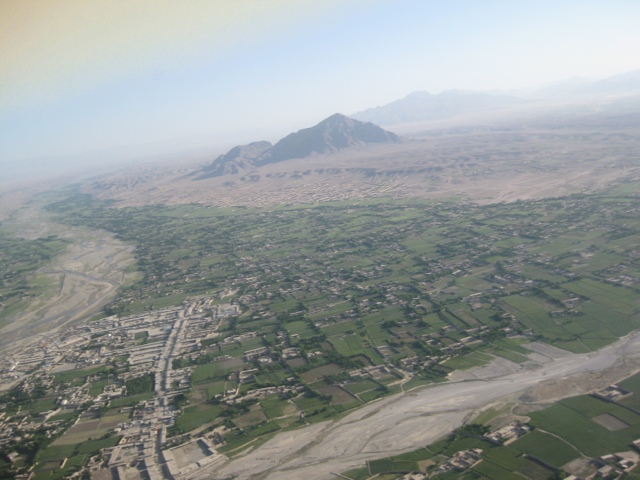
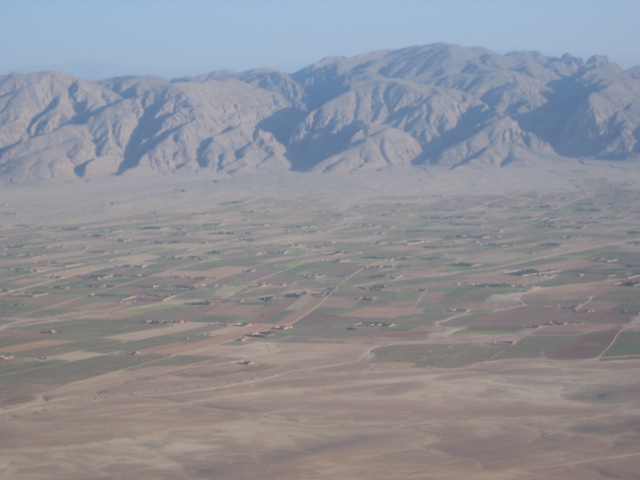
Today we fly north, towards the mountains in the northernmost reaches of Helmand Province. Our destination is COP Musa Qa’la (“moose ah kayla”), the headquarters of the 2nd Battalion, 5th Marines (2/5), under the command of Lieutenant Colonel Perry.

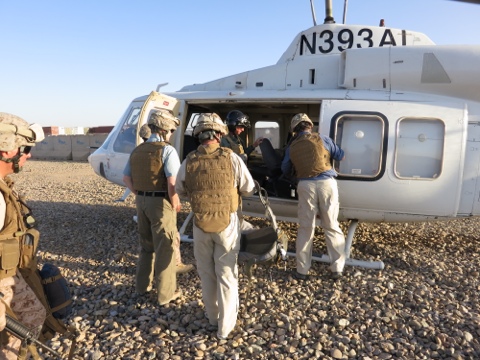
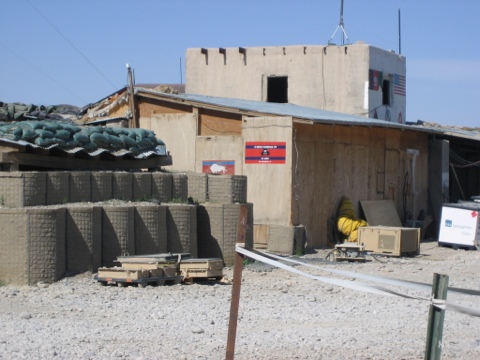
An 0345 wakeup, quick shower and then we pack up for an expected 2 nights in the field. The team assembles for a bus ride to the DFAC at 0430, breakfast at 0500 and then back to the landing zone for our chopper ride north. This time we fly in a civilian helicopter flown by contractors (or spooks?) and a second chopper takes our food and supplies and Harvey, who is always looking to be special / different in some way. Our flight to Musa Qa’la is 30-45 minutes in length and we land on an LZ that is at the top of a hill within the walled area of the COP. This COP is considerably larger than Coutu and is populated primarily by battalion headquarters and supporting units. There is also a British civil governance advisory team on the COP as well as some ANA. Our plan here is to cook for upwards of 300 Marines.

The COP is, as in Coutu, surrounded by Hesco walls and the Marines are, for the most part, billeted in large air conditioned tents. The COP is in the middle of a developed area – I didn’t get the name of the city – that serves as the district seat of government. To my best understanding, a district is the rough equivalent of a county in the US with a district governor appointed by the national government. All of the significant public officials, it seems, are patronage appointees of the Karzai regime and are, we were told, both corrupt and incompetent. They are, however, “hooked on American crack” as one Marine colonel at Leatherneck told us. They live off of the money and economic activity our military and civilian programs pump into the region like heroin into the vein. Withdrawal symptoms are likely to be severe, I fear.

Here in Musa Qa’la we met an Army Lieutenant Colonel, a lawyer, who is working as a criminal law advisor to the Afghan government. One of the cases he is working is the prosecution of the killer in the Camp Coutu “green on blue” killing of the Fox Company Marine. He is advising / supporting Afghan prosecutors. He seemed to feel pretty confident in a conviction.

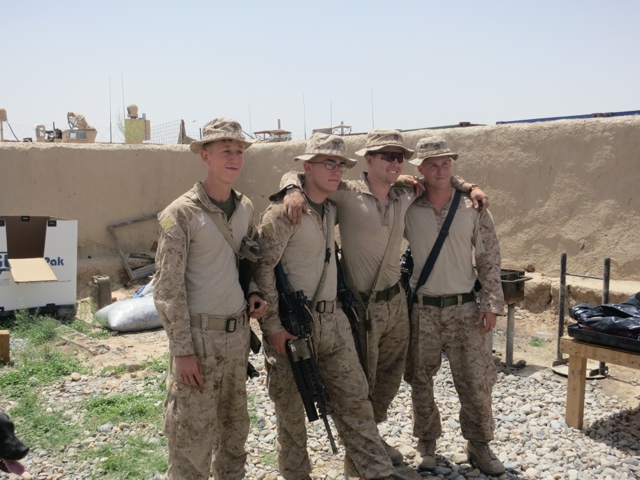
We had another great day with the Marines. We talked to them about their hometowns, how they came to become Marines, what they feel about their work, what their plans for the future are, etc. These represent a cross section of America, certainly, but they seem to me to share some traits: they joined the Marine Corps to have a different experience than that of the common American. They wanted to break out of their home towns, see something of the world, serve their country, earn educational benefits and experience combat. They are articulate, polite, well disciplined. Most are white or Hispanic. We saw relatively few African Americans in the forward deployed, “trigger pulling” units. Many are well educated, with a surprising (at least to me) number of enlisted soldiers with college education and degrees. They know their business and know they are good at it. They understand their mission and they respect their unit leadership, while maintaining a healthy skepticism about “higher.”

For the most part, they have little respect for the enemy and his tactics. They see him as undisciplined and cowardly. They are frustrated by rules of engagement that they see as overly restrictive. They are humble to a fault, soft spoken and possessed of a wry and sometimes fatalistic sense of humor. They are not chest beating, blood and guts, killing machine caricatures of Marines. They are, for the most part, bored by the day to day monotony of life on a COP. I am humbled by their service and sacrifice.

The day ended well, with a nice presentation of a certificate and a US flag that had flown over the COP today. Lieutenant Colonel Perry, the Battalion Commander, presented each member of the team with a dog-tag shaped commander’s coin as a thank you.

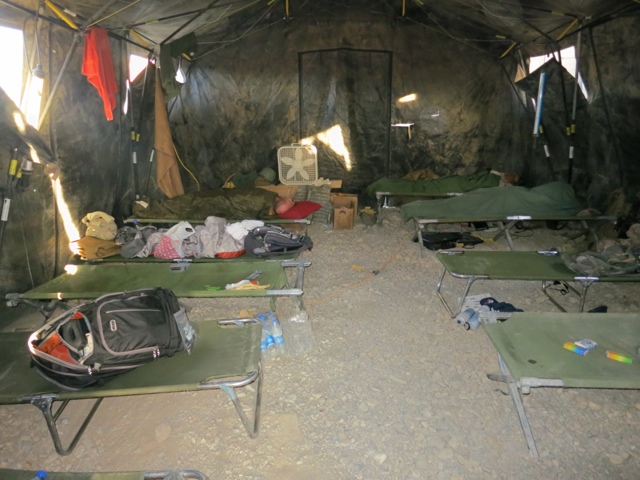
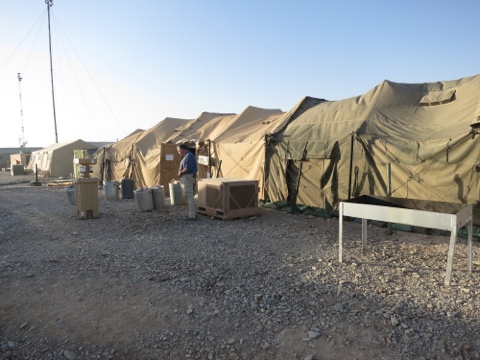
We departed Musa Qa’la via the same helicopters that had transported us this morning and headed for COP Shir Ghazay and LZ Hillary, only a few kilometers away. Two companies operate out of Shir Ghazay: Echo Company, 2/5 Marines and A Company, 1st Tank Battalion. A total of just over 300 Marines on the COP. We are escorted to our billets for the evening – cots and a 10-12 man tent – and treated to dinner of field rations consisting of rice, beans and tamales. Not too bad. Perfect, in fact.

20120506-141902.jpg

20120506-141849.jpg

20120507-141955.jpg

20120506-141914.jpg

20120507-142054.jpg

20120506-141938.jpg

20120506-141954.jpg

20120506-142005.jpg

20120506-142015.jpg

20120506-142028.jpg

20120506-142043.jpg

20120506-142101.jpg

20120506-142108.jpg

20120506-142121.jpg

20120506-142134.jpg

20120506-142148.jpg

20120507-132633.jpg

20120507-132834.jpg

20120507-132911.jpg

20120507-133047.jpg

20120507-141743.jpg

20120506-171533.jpg

20120506-171435.jpg


Coutu

Wednesday May 2, 2012

Today the team splits in two to travel to small Marine units scattered in outposts across the northern parts of Helmand Province. Our team will head south from Leatherneck to an area known as Marjah, a former Taliban stronghold and an area of significant fighting by the Marines about two years ago. While still contested by the Taliban, the Marines we met report that there is much less “kinetic” activity – this is military talk for shooting at people and blowing stuff up – than when they were here just a year ago. While there are occasional fire fights, the biggest threat is from IEDs. For this reason, as well as for reasons of time, we are transported by air and not in ground convoys.

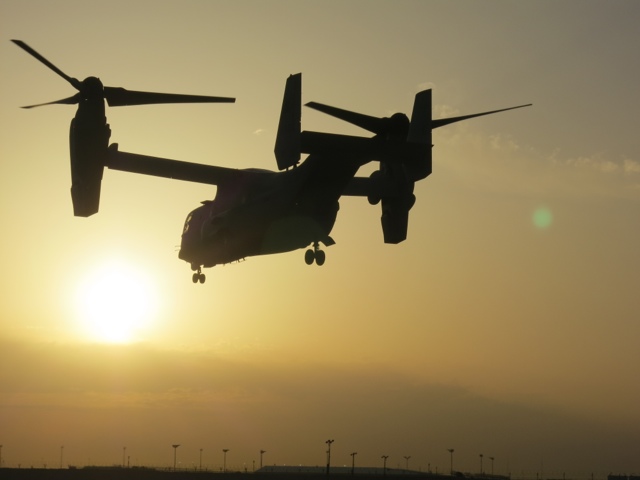
Our mission is to Combat Outpost (COP) Coutu and we travel there via a V-22 Osprey aircraft. The Osprey has been a controversial system that has had some bad press in the past due to safety concerns. It is a vertical takeoff and landing aircraft – like a helicopter – that can pivot its propellers and wing to allow horizontal flight like a regular fixed wing aircraft.

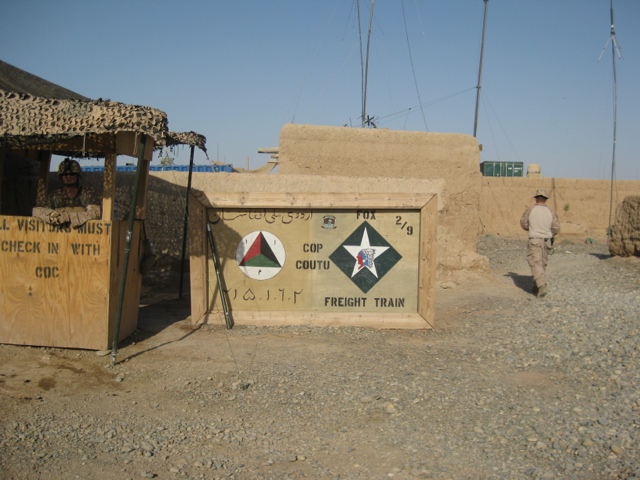
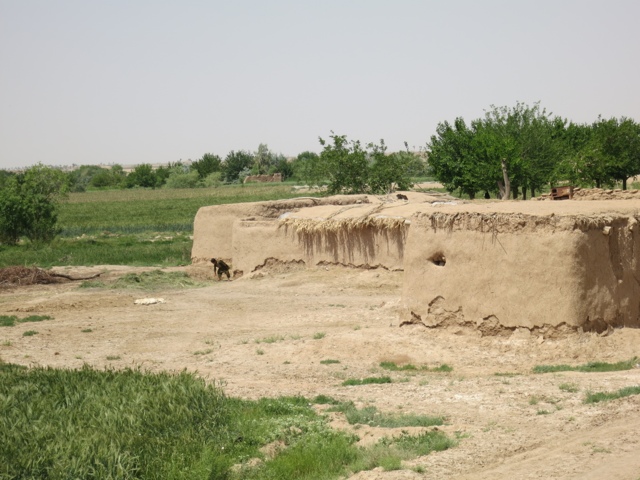
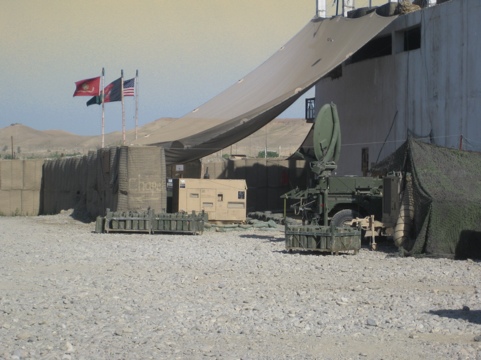
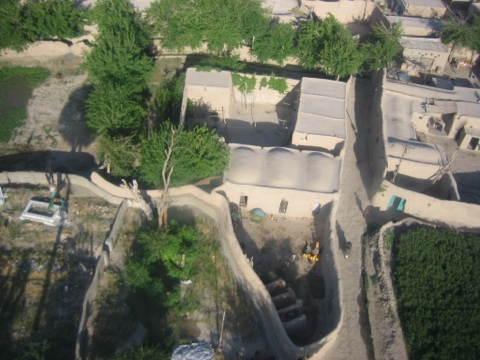
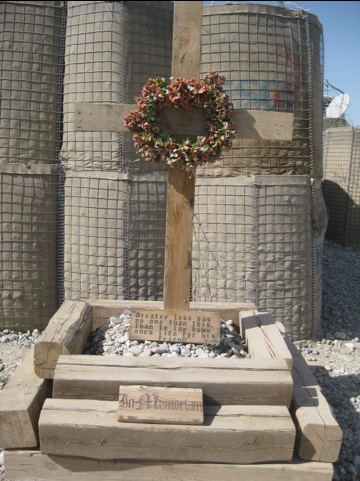
We make about a 15 minutes flight to Coutu, located slightly south and to the west of Lashkar Gah, and are greeted by the Executive Officer of Fox Company, 2nd Battalion, 9th Marines. COP Coutu is named after Marine PFC Kyle Coutu of the 3rd Battalion, 6th Marines, who was killed in action while fighting in the Marjah district in February of 2010. Coutu consists of a landing zone and a collection of mud brick walls, mud huts and tents. It was at one time a privately-owned farm, now leased by the Marine Corps. In addition to the Marines of Fox Company, there is a platoon or company sized unit of ANA stationed within the outpost. We must have been quite a spectacle on our arrival because a number of the ANA soldiers were there to watch us land. I was conscious of the recent spate of so-called “green on blue” attacks, where our Afghan “friends” have turned their weapons on American personnel. I watched them closely. Not really afraid, but certainly alert and cautious.

The senior officer at this outpost is Captain Clark, a hulking and imposing guy who served as an enlisted man in the Corps before attending the University of Missouri and receiving his commission. His First Sergeant, 1st Sgt McMellon, is an engaging and very tall man – at least 6’6″ in height, from Mansfield Texas who cannot wait to get back to Texas for the final few years of his Marine Corps career. He has already been selected for a recruiting assignment in Amarillo and then hopes to get back to the DFW Metroplex area.

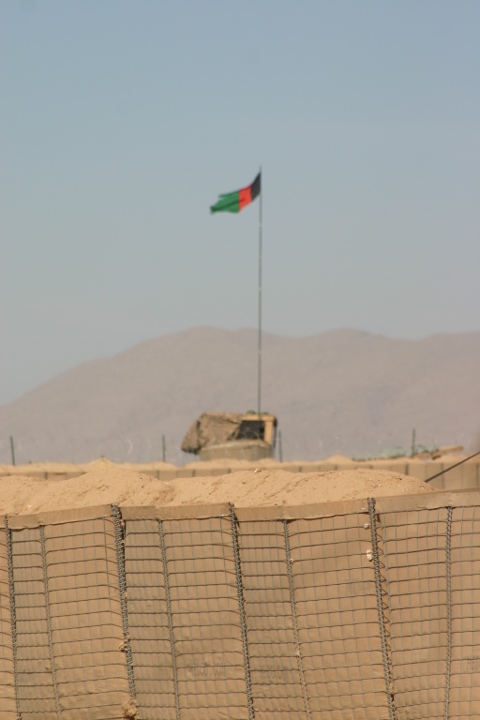
Last night, the Captain and a number of his Marines spent the night outside of the compound, building a new patrol base for the ANA. When the Marines leave here, the COP will be returned to the owner, after all of the “improvements” are bulldozed. These improvements consist primarily of what are known as “Hesco walls” – after the manufacturer of the system. A Hesco wall is essentially a heavy-duty wire cage, about 10 feet in height and lined with a heavy fabric, which is then completely filled with dirt, rocks, rubble, etc. Multiple Hescos can be linked together to create walls that serve as blast barriers and provide protection from small arms fire. Ugly, but functional.

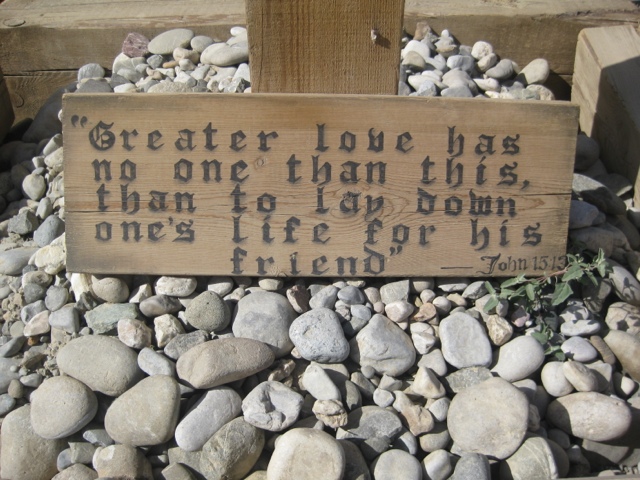
We learned that Fox Company lost one of its Marines to a “green on blue” shooting a few months ago. This means that a member of the ANA (a part of the “green” force – the military map color designating forces of unknown/suspect loyalty) who was working side-by-side with the Marines shot and killed one of them from within the Coutu compound while the Marine was standing his guard post. (Blue is the military map color for known friendly forces. Thus, “green on blue” killings are when an assumed ally turns his weapon on a friendly.) The killer was well known and well liked by the Marines, worked directly for them in the company’s Combat Operations Center and was eventually captured and turned over to the Afghan military for trial.

Fox Company is “short” at COP Coutu. They will be going home soon. They have been here since early December and will be leaving inside of 2 months. When their battalion departs the district, they will be replaced by a company sized element, all as a part of the aggressive drawdown presently underway. There are about 90 Marines on Coutu, with another 90 or so pushed out to 3 or 4 outlying patrol bases.

The cooking and serving went very well and the meal was greatly appreciated by the Marines. While they loved getting cooked to order steaks, the frozen icecream bars were a luxury beyond their ability to comprehend. Among the happiest of the happy was one of the explosive sniffing dogs – a beautiful black Labrador retriever – who attended the event with his handler. We had pretty badly burned a piece of meat and we gave it do the dog, who had never tasted something so savory, it seems.

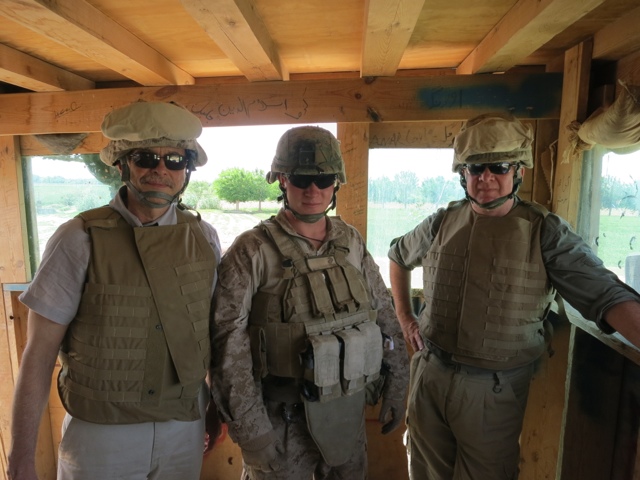
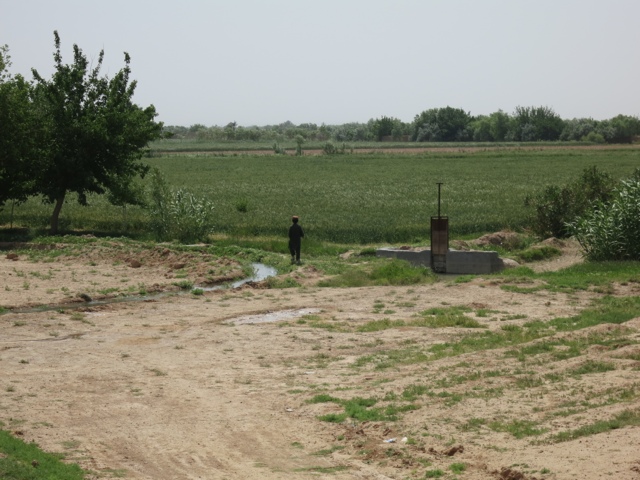
After lunch, Wayne Fleenor and I took a walking tour of the compound with First Sergeant McMellon and spent a good bit of time – fully geared up in helmet and body armor – on one of the guard towers overlooking the surrounding area. There we met PFC Welch, who was standing his post alone and who, I think, enjoyed our company, even if the First Sergeant was with us. Looking over the Hesco wall into the surrounding countryside, I was surprised to see how close we were to the village and the villagers. No more than 25 yards away, I would guess. We watched for a while as they went about their business, pretty much ignoring us. What a stark contrast between the centuries-old subsistence agrarian lifestyle they lead immediately adjacent to the 21st century technological and military might of the United States Marine Corps. Both the villagers and the Marines, I believe, would rather the Marines be somewhere else. At the same time, the Marines report to us that the villagers have grown to trust them and that they fear the return of the Taliban and the corruption and extortion that they represent.

We had the serendipitous good fortune to meet First Lieutenant Preston Lacy on COP Coutu. Lieutenant Lacy is a graduate of the University of Nebraska and is one of the Platoon Commanders working for Captain Cook of Fox Company. Lieutenant Lacy grew up on Cornell Ave in Highland Park and his extended family operates a successful paving and utility contracting company in Dallas, L.H. Lacy. While Preston and his family moved away from Dallas and Highland Park before he graduated from high school, he still considers Dallas home, remembers Goff’s hamburgers fondly, and looks forward to returning to Dallas after his service to join the family contracting business.

Before meeting Lieutenant Lacy personally, I was talking with some of his Marines. They had just pulled into the COP after being out on an overnight mission. As their Lieutenant walked by, one of the Marines said to the others, “He is a really good LT” and there were nods and sounds of agreement all around. I asked, “tell me what makes a good Lieutenant.” They all started talking at once, but the essence of it was this: “He doesn’t think he is better than us just because he is an officer,” and “He isn’t a dumbshit” (as, apparently, most LTs are) and “He’s chill.” I had the opportunity to later relate this story to Lieutenant Lacy and he was surprised and pleased. The burden that these junior officers and NCOs assume for the lives and well-being of the men they lead is an awesome one and it warmed my heart to hear that, in this case at least, they do it very well. When and if the time comes – or maybe it has already come – when Lieutenant Lacy has to ask these men to risk their lives with him, they will follow.

We were allowed very nearly unfettered access to the Combat Operations Center. While we were not present during an actual operation, we were shown the capabilities of the observation and surveillance technology that they have at their disposal. Through very sophisticated cameras mounted on towers and blimps, the commanders in the operations center have the ability to see, monitor, track, locate, range and, if need be, kill or cause to be killed just about everything within their area of responsibility.

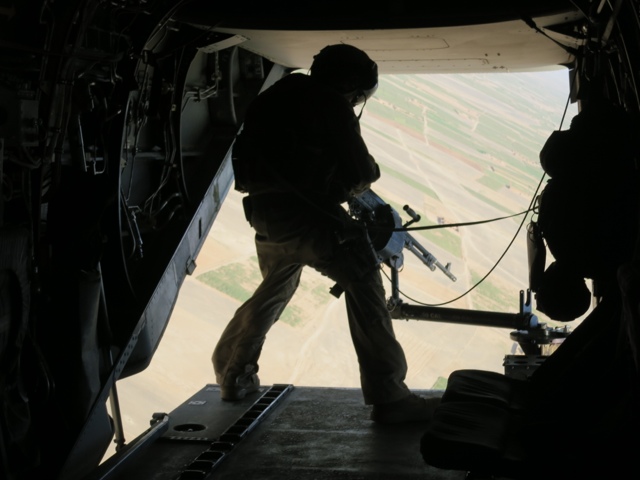
Late in the day, about two hours later than planned, we were picked up by a Marine helicopter and taken back to Leatherneck. The CH 53 is one of the Marine’s workhorse helicopters, but they are very old. I sat almost directly under the rotor and it spewed oil and/or hydraulic fluid on me much of the way back. The crew told me I should be happy and that if it wasn’t spewing oil we were in trouble! Roger that! We shared the ride with some Army officers and soldiers who were on some kind of inspection trip. They were not particularly forthcoming about who they were or what they were doing, but they were mighty curious about who the hell we were!

AFTERWORD: A day after we were at COP Coutu, the team received the following email message:

Begin forwarded message:

From: “McMellon 1stSgt Phillip D (2/9 Fox 1stSgt)” To: “Wayne Fleenor” , “curtisinafghanistan@yahoo.com” , “julesvsmith@msn.com” , “jules.smith@usfoods.com”
Subject: Steaks at COP Coutu, Afghanistan

Gentlemen,

I wanted to send my appreciation for all your hard work in feeding the Marines and Sailors of Fox Company, 2d Battalion 9th Marines. Your professionalism and motivation were inspirational to all here at COP Coutu. The Marines and Sailors really enjoyed the steaks and side dishes you prepared. I’m still amazed that a group of very patriotic men from Texas found a way to let the US government fly them into a combat zone to feed Marines out at the smallest, most remote patrol bases.

From all the Marines and Sailors here at COP Coutu, thank you for what you do! I hope we can meet again in Texas.

Semper Fi,

1stSgt Phillip D. McMellon
Fox Co.
2d Battalion 9th Marines
COP Coutu
Marjah, Afghanistan

AFTER AFTERWORD: Upon our return to Dallas, I had the great pleasure of tracking down and talking to Lieutenant Lacy’s father in Nebraska. I was able to send him photos of Preston, report to him that his son was doing well and that his men had enormous respect and affection for him. Mr. Lacy had heard from Preston just a couple of days before my call, saying, “Dad, you are not going to believe who just showed up out here!!!”
20120506-141220.jpg

20120506-141241.jpg

20120506-141323.jpg

20120506-141339.jpg

20120506-141354.jpg

20120506-141406.jpg

20120506-141415.jpg

20120506-141425.jpg

20120506-141446.jpg

20120506-141458.jpg

20120506-141513.jpg

20120506-141527.jpg

20120506-141545.jpg

20120506-141558.jpg

20120506-141608.jpg

20120506-141620.jpg

20120506-141640.jpg

20120506-141706.jpg

20120506-141728.jpg

20120506-141737.jpg

Leatherneck

Tuesday May 1, 2012

After an 0430 “show time” at the APOD (air point of departure – the military side of the Kuwait City airport) and five hours on a C-130, we arrive at the sprawling Camp Bastion / Camp Leatherneck complex in southern Afghanistan. Camp Bastion is the principal base of the British forces in this area and the location of the main airfield. Camp Leatherneck abuts Bastion and is the headquarters of Task Force Leatherneck, the main component of which is 1 MEF – the First Marine Expeditionary Force or “Eye MEF” – a 2-star command headed by a United States Marine Major General, MG Gurganus. About 15,0000 US Marines are on Leatherneck, most a part of the huge logistical tail it takes to support the “trigger pullers” in the outlying outposts. There are also quite a number of civilian contractors and a smattering of coalition forces from such nations as Jordan, Georgia, Norway (I think) and, of course, the United Kingdom. The Task Force Leatherneck Deputy Commander is a British Army Brigadier. I think, all-in-all, there are around 20,000 personnel on Bastion/Leatherneck. The base is located to the north and west of Lashkar Gah, the capital city of Helmand Province.

Leatherneck, though a forward deployed headquarters, is very much a garrison environment. The people here primarily do office administrative work, maintain reasonably regular office hours, although they work very long hours and have no days off, and there are rules, regulations, policies, procedures, rules, paperwork, regulations, rules and a few more procedures to deal with. It’s ambiance is military chic – very utilitarian, no frills attached.

The landscape on Leatherneck is table-top flat and there is nothing – repeat, nothing – green in sight. Every surface is either paved or covered with coarse gravel. The “crunch crunch crunch” sound of boots on rocks is omnipresent. The climate is arid and the high temperatures this time of year can be in the mid 90’s. Overnight lows in the middle 60s.

Upon our arrival, we are greeted by Major Stockwell, USMC, a Marine Corps Lieutenant,  several senior NCOs, along with a couple of corporals and lance corporals who will form our official escort and security detail during the course of our stay in the war zone. Most of them, if not all of them, come from the logistics section of the staff and, more particularly, the food service organization. They are cooks and managers / overseers of contract personnel who prepare the food in the many dining facilities (DFACs  or “dee faks”) that dot the base. So, our safety and security in the field is, appropriately, being ensured by cooks! Nevertheless, these are United States Marines and every Marine is first a rifleman.

We receive a welcoming in-brief from the team that will support us, including a short talk by a Colonel Fitzgerald, the Chief of Staff to the Commanding General, an even shorter “Semper Fi!!” motivational welcome from the Sergeant Major and a detailed review of our mission plan from Gunnery Sergeant Anderson. We also meet Master Sergeant Holloway who, along with a second Master Sergeant, a female Californian named Wheeler, will have charge of each of the two teams we will send into the field tomorrow.
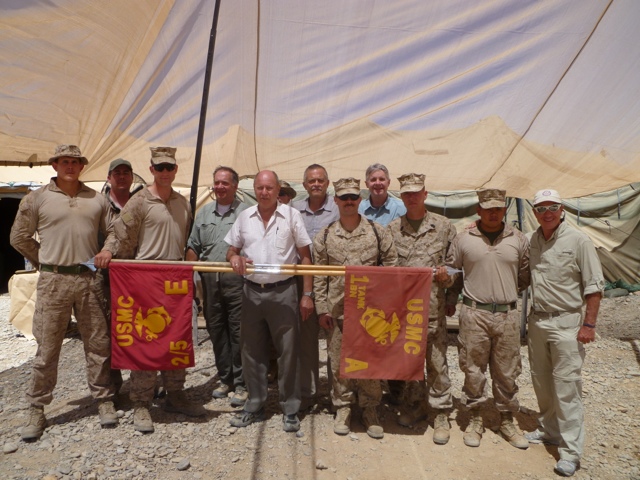
It seems that the main focus of the headquarters staff is the management of the Obama Administration’s mandated force reductions in this region. All Marines will be out of Afghanistan by the end of October and primary responsibility for the security of Helmand will assumed by the Afghan National Army (ANA), the Afghan National Police (ANP) and lower level provincial and local security forces. Our briefers make it clear that this is, and I quote: “a numbers-based draw down and not a conditions based draw down.” In other words, the real policy objective is to reduce our numbers by a date certain, without regard to the military conditions on the ground. They do report, however, growing confidence in the ability of the ANA and the ANP to step up to their roles. There is considerably less confidence in the regional and local security forces.
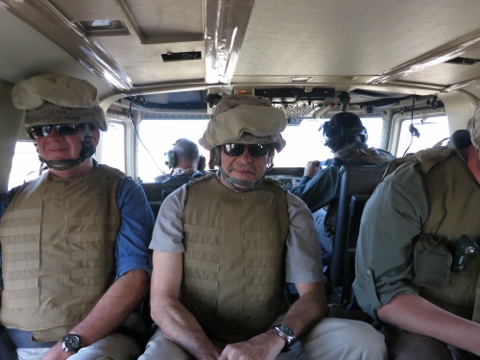
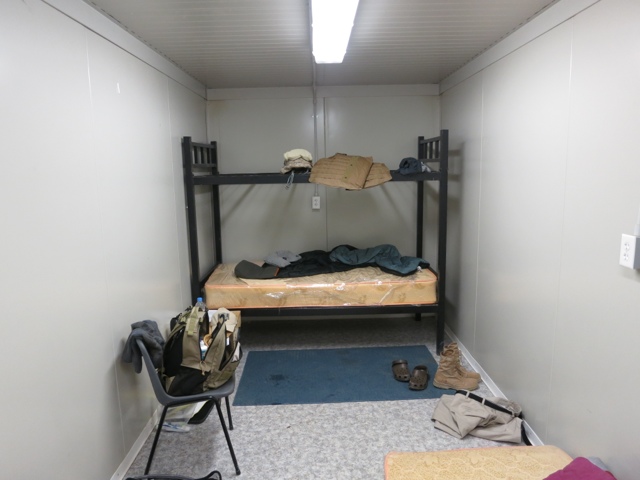
After the in-brief, it is off to billeting to secure our quarters and draw our PPE – “personal protective equipment” consisting of a kevlar helmet and individual body armor with protective front and back ceramic plates – that we will be required to wear when moving from location to location in the field. Our quarters consist of the ubiquitous metal containers used for multiple purposes over here. On our mission to Djibouti, these were known as “clues” – CLU or Containerized Living Units. In Baghdad and Mosul, Iraq, they were known as “chews” – CHU for Containerized Housing Units. Here, they are just “cans” – CAN for can. Completely functional, air conditioned, and just a brief stroll to the latrines and showers, which are themselves metal containers modified for those respective purposes.
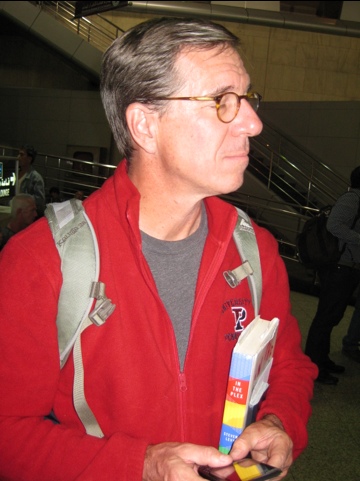
Sometime along the way, Harvey informs me that I will serve as his “Deputy” on cooking Team 1 (I think that amounts to a promotion from private all they way up to private) and he, Tony Booth, and Tony’s “Deputy,” Terry Castle, trudge over to headquarters to do final planning for the next three days. I take copious notes. They will be neither considered nor consulted again.

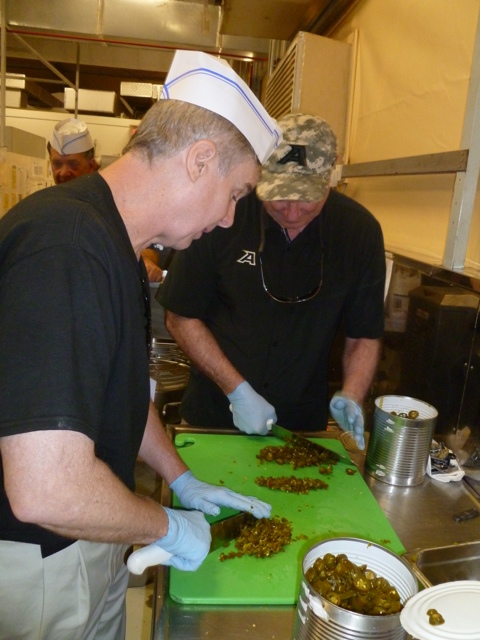
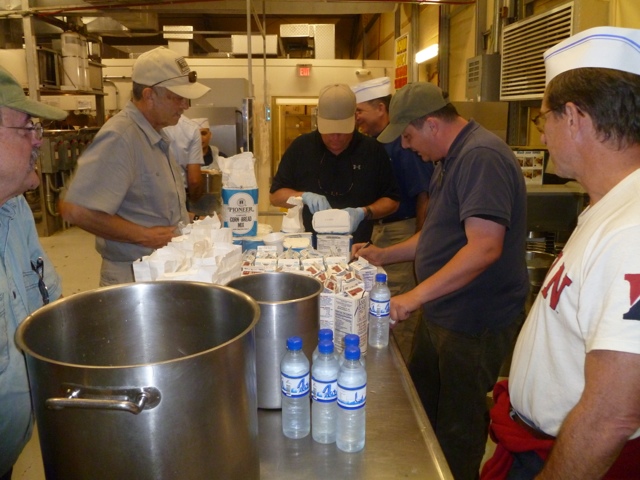
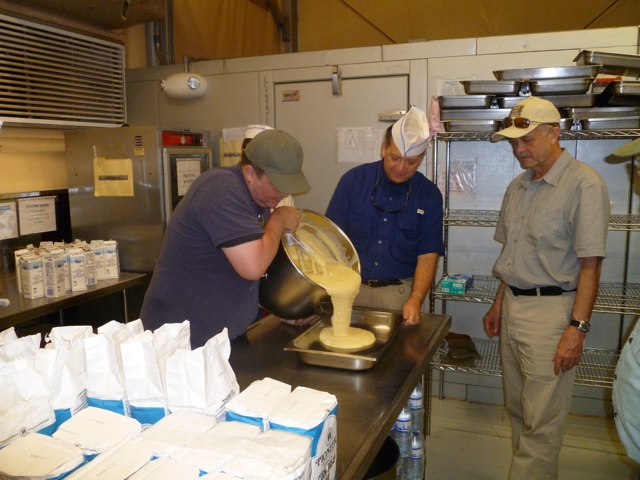
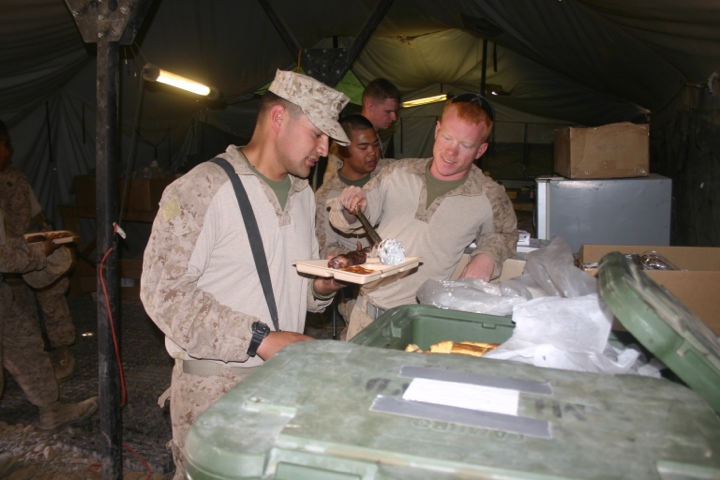
The team shared dinner with our escort party in the DFAC and we then invade and hold a portion of the commercial-grade kitchen to begin our preparation for the fieldwork that starts in the morning. I am placed “in charge” of cornbread preparation. A lofty perch, indeed. We will be serving approximately 2,000 portions of cornbread and we have only one shot at a kitchen. So, we cooked all  of the cornbread in advance and placed tray upon tray inside insulated containers for transport to the field. Other members of the team are assigned to review and account for all of the other foodstuffs and to organize them into shipping containers with the appropriate supplies for each of the six COPs – Combat Outposts – we will serve over a three day period.

One of our team, Jules Smith, is a trained chef. I quickly determine that he knows more – way more – about mass production of food than I do.  I gladly let him run the cornbread production show. With the help of about 6 other very much “Type A” personalities – many of whom have their own opinions (never mind their complete lack of experience or expertise) on how we should prepare this stuff. After lots, and lots, of trial and error we starting cranking out cornbread in large quantities. The contract kitchen staff – most of whom are Indian, Pakistani, Bahrainian, etc. – get quite a bit of entertainment value out of the Keystone Cops aspect of our cornbread cooking. The contractor supervising them – who was very helpful – said that this is usually a one man job in his kitchen! Well, if one is good, isn’t six that much better? (Hint: “NO”)

I don’t know what time we finished all of the cooking, cutting, packing, checking, cussing, re-checking and re-cussing it took to get ready. But we got ready. We retired to our cans for a short rest with a 0330 wakeup, breakfast at the DFAC at 0415 and a “show time” of 0500 at the airfield for transport to the first day’s cooking sites.

20120506-140527.jpg

20120506-140606.jpg

20120506-140651.jpg

20120506-140724.jpg

20120506-140740.jpg

20120506-140750.jpg

20120506-140803.jpg

20120506-140818.jpg

20120506-140840.jpg

20120506-140906.jpg

20120506-140919.jpg

20120506-140930.jpg

20120506-140941.jpg

20120506-140952.jpg

Phase lines

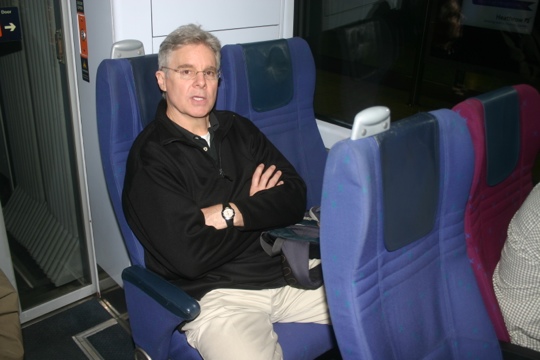
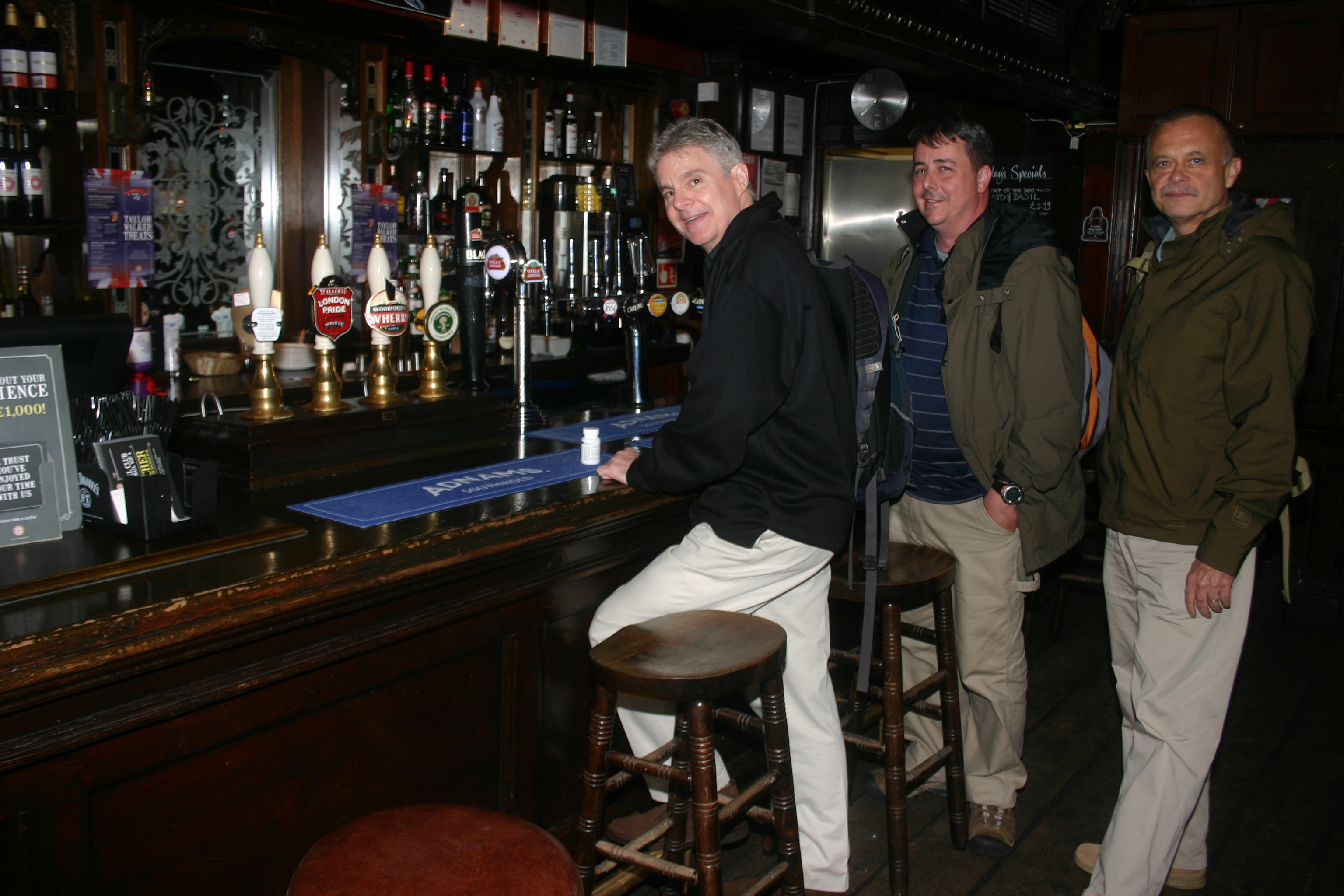
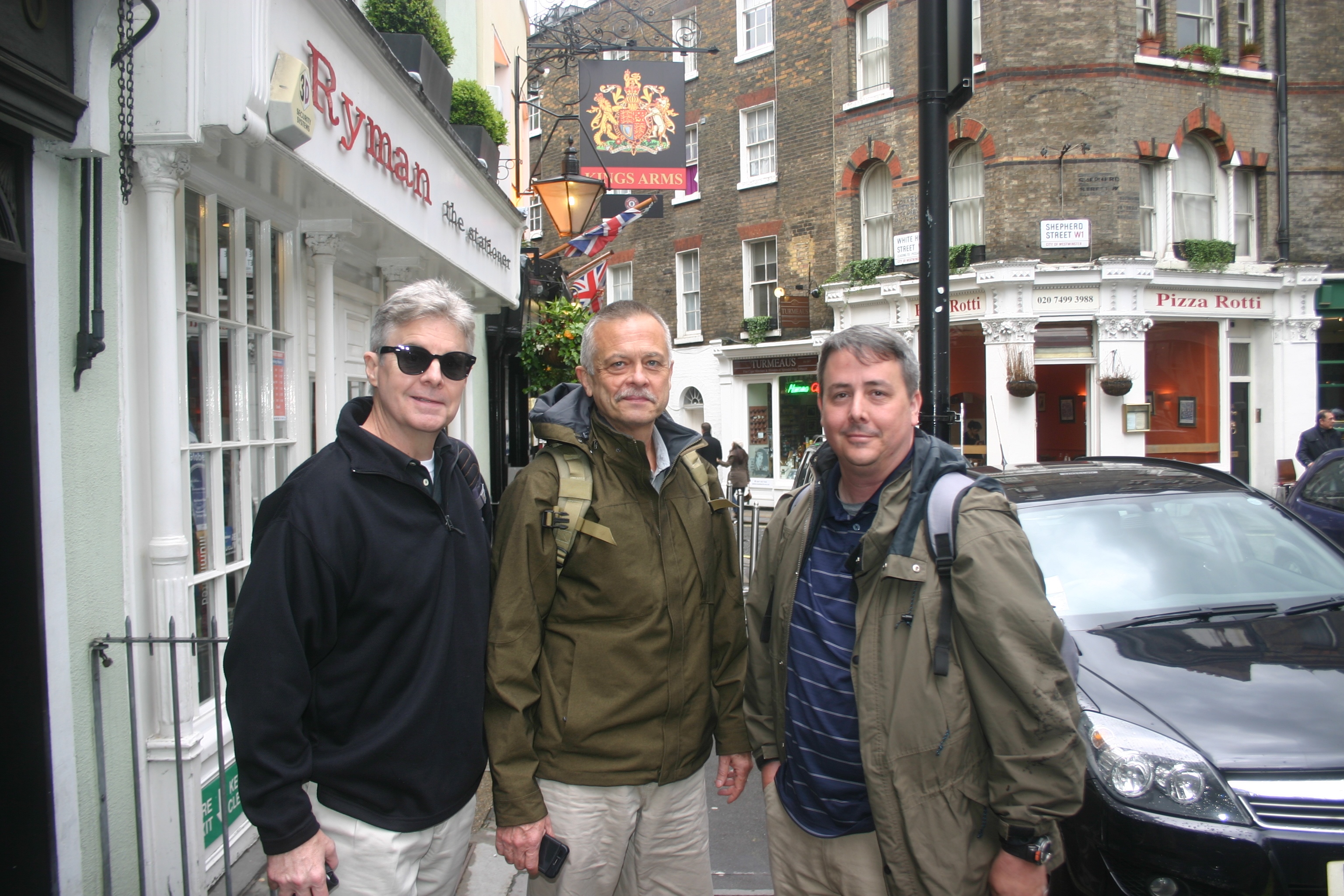
The early phases of Steak Mission Helmand have been executed and we are approaching our line of departure. After a delayed flight out of DFW the main body arrived at London Heathrow around noon. Cold and drizzly, as all London days seem to be, a malfunctioning jet bridge forced us to deplane through the rear door and down a steep and slippery stairway to waiting busses. Along with my old friend Chad Downs and my new friend Jules Smith, we took the train in to central London to meet up with Wayne Fleenor and sample the local brew at two pubs in Mayfair. Later we linked up with team leader Harvey Gough for dinner and a return ride to Heathrow. There we met Army football coach Rich Ellerson and the balance of the team. In addition to those already mentioned, team members include veterans Tony Booth, Terry Castle, Michael Dee and Jason Reasonover. Newcomer Ronnie Yankee rounds out the battle roster.

After about10 hours on the ground in London, we boarded our British Air overnight flight to Kuwait City. We were warmly greeted by members of our military reception team, including LTC Paul Henry, USMC and Army Captain Lillian Guadalupe and Dave Kim. (Interesting side note: CPT Kim is assigned to the ARCENT – the Army headquarters element of Central Command – as the military band director. His “real” job, when not deployed, is as the Assistant Director of the West Point band.)

At this point, our plans began to unravel. We had two options for follow – on air travel into Afghanistan. It proved difficult, to say the least, to align Harvey’s expectations for air support with our Marine Lieutenant Colonel’s ability / willingness to accommodate those expectations. There was a scheduled 2:30 pm departure out of Kuwait to Kandahar or a 5:00 am departure the next morning directly to Bastion. For our purposes, Bastion is adjacent to Camp Leatherneck and therefore better than Kandahar, which would require yet another flight. On the other hand, we’d like to get to Afghanistan sooner rather than later. After many machinations and arm twisting – including a threat from Harvey to cancel the Marines in favor of an Army unit in Kuwait – the issue was resolved by the passage of time. We are going to Bastion and departing at 0500 on Tuesday, 1 May.

Update: 1 May, 2012: We are now at the airfield in Kuwait, it is 0300 and we expect to depart at about 0500 for Camp Bastion, Afghanistan. We spent the night – what there was of it – at Camp Arifjan, southeast of Kuwait City, had dinner with the Deputy Commanding General of the US Third Army stationed here, and are at the starting point for our mission. We cross the LD – line of departure – in 2 hours and are ready and eager to be on our way forward.

More anon.

David

20120501-011259.jpg

20120430-034308.jpg

20120430-034252.jpg

20120430-034150.jpg

20120430-034213.jpg

20120430-034231.jpg

20120501-042558.jpg

20120501-042616.jpg

20120501-042631.jpg

20120501-042644.jpg

20120501-042736.jpg

20120501-042751.jpg

Downrange Once More

To our Family, Friends and Supporters:

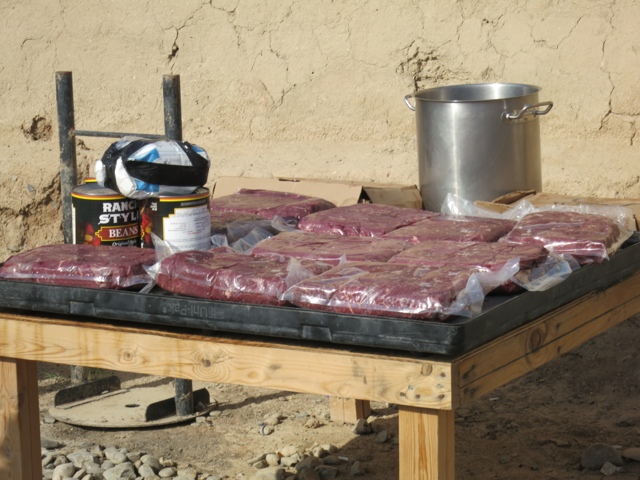
Steak Team Mission Founder Harvey Gough (aka Steak 6) and 11 other volunteer team members will soon deploy to Afghanistan. We will be serving the Marines of Task Force Leatherneck in Helmand 20120425-231747.jpgProvince. The plan is to prepare approximately 2,000 cooked-to-order steak dinners for Marines assigned to six separate combat outposts (COP) scattered across the province. We are transporting all of the foodstuffs necessary to complete a full meal including appetizers, tenderloin steaks, ranch style beans, coleslaw, cornbread and ice cream bars.

This mission, we have a special guest joining us: Coach Rich Ellerson, West Point’s head football coach. We are very pleased that Coach Ellerson can join us and bring an added bit of excitement to the deployed Marines and Army personnel we expect to encounter. Most of the team have multiple missions under their belts, both foreign and domestic. This is the 18th Steak Team Mission and the third to Afghanistan. It will be my sixth overall and fourth overseas.

The team will first rally in London, then fly on to Kuwait and the Central Command (CENTCOM) area of responsibility. From there, we will board a United States Air Force cargo plane, along with several pallets of food and equipment, for “insertion” to the war zone via Camp Bastion, a British-controlled air base in Helmand, adjacent to Camp Leatherneck, the main Marine base in the area. After a day of equipment issue, security briefings, preparation and a little bit of catch up sleep, the team will split into two separate teams and, over the course of 3 or 4 days, travel to forward outposts to do our small part to serve the Marines who do so much and serve us so well.

The successful execution of every steak mission relies on the staunch support of our many friends and family who give generously. Every donation, every in-kind contribution, every gesture of support and encouragement makes a difference and makes these missions possible. You are legion, and I hesitate to even try to enumerate you for fear that I will leave someone out. THANK YOU ALL. You know who you are.

Special thanks to my wife, my kids and my parents for lovingly indulging my need to get off my butt, go out and try to just DO SOMETHING useful in support of the special breed of men and women who willingly go in harms way for me. Again, and again, and again.

I don’t know how much connectivity to expect once downrange. My guess is: not much. But, I will attempt regular updates, along with photos, as the mission progresses.

This year, I learned another military expression from Michael: “Charlie Mike” These are the phonetic alphabet terms for the letters “C” and “M” used in radio transmissions. Charlie Mike = Continue Mission. So, until the next post … Charlie Mike.

David